UFC Prop Bets: Performance Bonuses, Knockdowns, and Specialty Markets
 Available in US
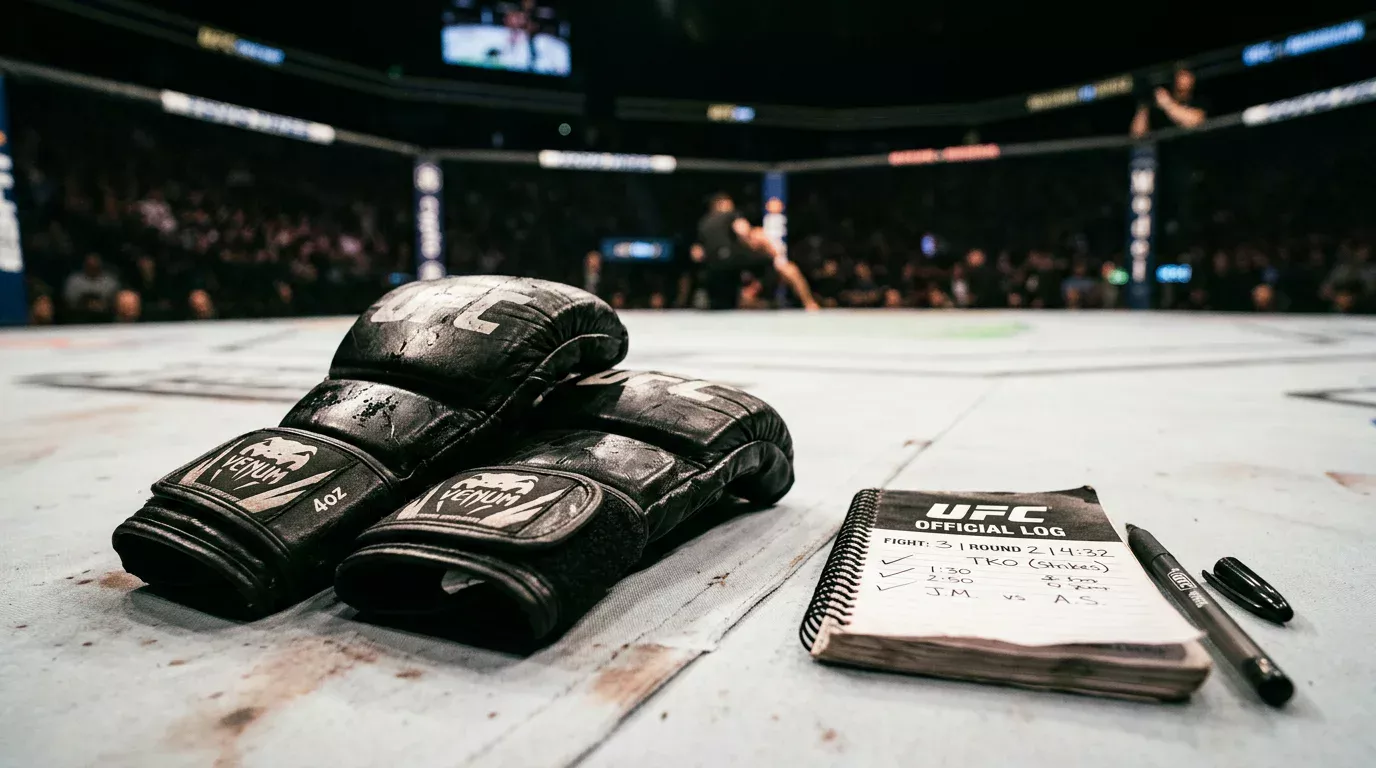
There is a fault line running through the UFC prop menu that most bettors never notice. On one side sit markets grounded in objective, measurable events — knockdowns landed, significant strikes thrown, takedowns completed. On the other sit markets tied to subjective decisions made by UFC brass after the fight — Performance of the Night, Fight of the Night. These two categories require completely different analytical approaches, and lumping them together as “props” is the quickest way to misprice your own edge.
Performance Bonus Bets
I once watched a fighter deliver a highlight-reel knockout in the second round of a prelim, then lose the Performance of the Night bonus to a main-card submission that was, by any objective measure, less spectacular. That is the core problem with this market: you are not betting on the performance itself. You are betting on a panel’s interpretation of what constitutes “best,” and that panel’s criteria shift from event to event.
UFC hit record annual revenue of $1.4 billion in 2024, and the bonus pool is a fraction of that — typically $50,000 per winner per event, sometimes doubled by Dana White’s discretion. The amount matters because it tells you the incentive structure: fighters on the lower end of the pay scale chase bonuses aggressively, while headliners earning seven figures are less likely to alter their game plan for a $50,000 payout. That behavioural split creates an edge if you know where to look. Fighters on debut contracts or in their first main-card appearance are statistically more likely to swing for the fences, and the bonus market does not always reflect that urgency.
Knockdown Markets
Knockdowns are the cleanest prop on the UFC menu. A knockdown is a binary event scored by the referee in real time — either a fighter hits the canvas or they do not. No subjectivity, no post-fight committee. The data is public, the counting is unambiguous, and the market is priced off historical knockdown rates for both fighters. I gravitate toward knockdown props because the analytical framework is transparent: you are modelling a countable event with clear historical precedent.
Where I find value is in the “total knockdowns in the fight” over/under. On heavyweight bouts between two fighters with knockout power and suspect chins, the over on total knockdowns can be underpriced because the model anchors to each fighter’s individual rate without fully accounting for the collision effect. Two heavy hitters create more knockdown opportunities than either would against a defensive counter-fighter, and the line sometimes lags behind that logic.
The inverse applies on grappling-heavy matchups. If both fighters are takedown-first wrestlers, the knockdown line sits at 0.5 with the under juiced heavily, and there is rarely any value on either side. I skip those entirely and redeploy the bankroll elsewhere on the card.
Takedown and Significant Strike Props
Takedown props ask you to predict how many takedowns a specific fighter lands, or whether the total exceeds a threshold. Significant strike props work the same way but on volume: will Fighter A land over or under 85.5 significant strikes? These markets sit in a sweet spot for me because the underlying data is publicly available on UFC’s stats platform, which means you can build a model and compare it to the bookmaker’s line.
The catch is sample size. A fighter with three UFC bouts has too few data points for stable averages, and the bookmaker often sets wider margins on thin samples to protect themselves. I avoid takedown and strike props on fighters with fewer than five UFC fights unless I have watched extensive regional footage and can contextualise the numbers. For established veterans with 15+ fights on record, the data is rich enough to identify when a line is off by a meaningful amount.
One pattern I track: fighters moving up or down a weight class often see their significant strike rate change dramatically. A fighter who lands 5.2 significant strikes per minute at lightweight might drop to 3.8 at welterweight because the opponents are bigger, more durable, and harder to hit cleanly. The prop line does not always adjust for the division change quickly enough, and that gap is where I have found consistent edge over multiple years.
Card-Wide Props
Some operators offer props that span the entire event rather than a single fight. Total finishes on the card, total knockdowns across all bouts, whether any fight goes to a split decision — these are aggregate markets, and they appeal to bettors who want action on a full card without picking individual fights.
I treat card-wide props as entertainment rather than serious wagering. The variance is enormous because a single unexpected decision on the early prelims can blow up your total finishes over. The margins are also wider than on individual fight props, because the bookmaker knows that card-wide markets attract casual bettors who are watching the broadcast and want general engagement. If you find yourself tempted by a card-wide prop, ask whether the price truly compensates you for predicting the behaviour of 12-15 separate fights simultaneously. Usually, it does not.
Prop Depth and Where to Find It
Not every UK operator prices props at the same depth. Nicholas Smith, SVP of Global Partnerships at TKO, described the bet365 partnership as bringing scale, credibility, and innovation to the UFC betting space — and that innovation includes deeper prop menus than most competitors offer. UFC sponsorship revenue hit $314 million in 2025, a 25% year-on-year jump, and the investment flowing into the betting ecosystem has expanded prop availability across the board.
In practice, prop depth varies by event tier. A UFC numbered event (UFC 310, UFC 315) will have full prop menus across the main card and most of the prelims. A Fight Night card might only carry props on the main event and co-main. And an international fight night — particularly one broadcast outside prime UK hours — might have moneyline and over/under only, with no props at all.
My workflow: check Bet Builder availability first, because operators that offer Bet Builder on a fight almost always have a full prop menu for that same bout. If Bet Builder is not available, check the individual prop tab. If neither exists, the fight is too thinly covered for prop wagering, and I move on to a market where the pricing is competitive.
How is Performance of the Night graded for UFC prop bets?
Performance of the Night is selected by a UFC panel after the event, based on their subjective assessment of the most impressive individual performance. There are no published scoring criteria — factors include finish quality, technique, entertainment value, and sometimes card position. Because the decision is subjective and unpredictable, this prop carries higher variance than data-driven markets like knockdowns or significant strikes.
Which UK bookmakers offer the deepest UFC prop menu?
Prop depth varies by event tier rather than by operator alone, but larger UK-licensed sportsbooks with official UFC partnerships tend to carry the widest range. Numbered UFC events receive the deepest coverage across most operators, while Fight Night cards may only feature props on the top two or three bouts. Check prop availability fight by fight rather than assuming a single operator always leads.
Written by the editors at mma Betting Websites.