
MMA Betting Strategy: Reading Fighter Profiles, Style Match-ups, and Line Movement
 Available in US
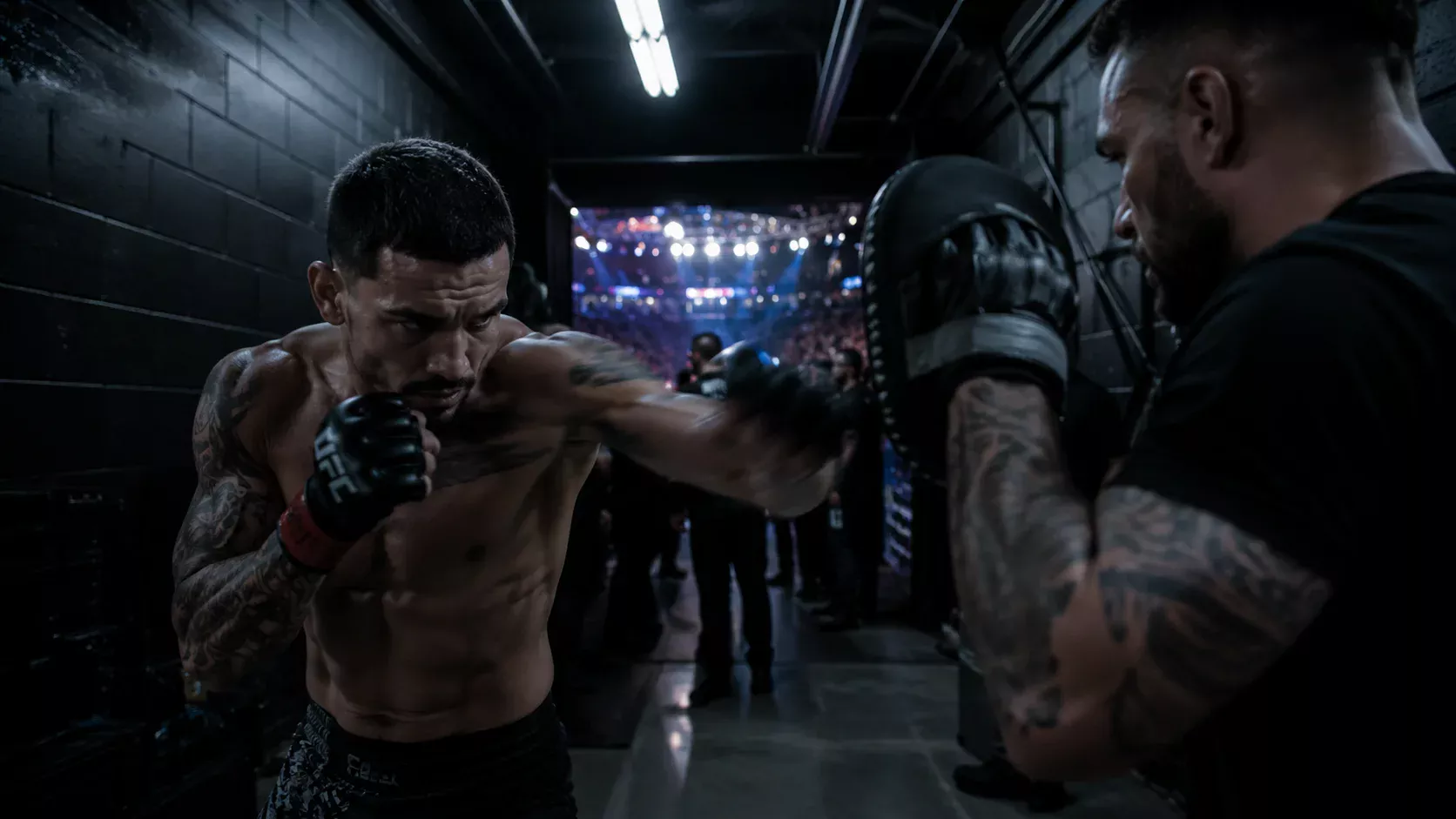
MMA betting strategy rests on three independent layers — fundamental fighter analysis, line movement reading, and bankroll control — and none of them works without the other two. I learned this the expensive way. In my second year of serious MMA wagering, I was genuinely good at reading fighters and picking winners. I was also broke within six months, because my staking was reckless and I never tracked my results. Picking the right fighter is one-third of the problem. Pricing the edge and sizing the bet are the other two-thirds, and they are the parts nobody talks about on social media.
This guide is not a shortcut to profit. There is no such thing in a market where the bookmaker’s margin guarantees they win on average. What I can offer is a framework — tested across nine years and several thousand tracked bets — for identifying spots where your analysis gives you a genuine edge over the market’s implied probability, and for turning that edge into disciplined, sustainable wagering.
Fundamental Fighter Analysis
The UFC estimates its global fanbase at roughly 700 million people, with around 40% of that audience being women — a demographic split that defies the old “combat sports is for blokes” stereotype. But fandom and betting acumen are different currencies. Knowing who a fighter is tells you nothing about how they fight, and the gap between casual name recognition and genuine analytical understanding is where most money is lost.
Fundamental analysis starts with three data points: striking output, grappling efficiency, and durability. Striking output means significant strikes landed per minute, adjusted for the quality of opponents faced. A fighter averaging 5.2 significant strikes per minute against low-ranked opposition is not the same as one averaging 4.1 against top-ten competition. Grappling efficiency covers takedown accuracy, takedown defence, and submission attempts per fight. Durability is the hardest to quantify — it includes knockdown absorption rate, recovery speed after being hurt, and how a fighter performs in the championship rounds versus the opening frame.
Millennials make up roughly 40% of the UFC fanbase, and this demographic has grown up with data literacy that older generations of bettors lacked. The tools are there — public stats databases, fight metric sites, film breakdowns on YouTube — and the entry cost for building a fighter profile is essentially zero. The edge is not in having access to the data. It is in knowing which data matters for a specific matchup and which is noise.
My process for building a fighter profile before a bet: I watch the last three fights in full, noting not just outcomes but patterns. Does the fighter start slow and finish strong? Does their output drop after the first round? Do they change their approach against southpaw opponents? These behavioural patterns do not show up in aggregate statistics but reveal themselves on film. The statistics tell you what happened. The film tells you why. You need both.
One variable that gets overlooked consistently is the training camp. A fighter who switched gyms between fights, brought in a new striking coach, or changed their strength and conditioning programme is a different proposition from the one who fought six months ago. Camp changes are often announced on social media or in pre-fight interviews, and they should trigger a reassessment of your fighter profile. The market sometimes adjusts for high-profile camp moves but frequently misses mid-tier ones.
The Style Match-up Framework
Every MMA forum in existence has declared at some point that “styles make fights.” The statement is true but useless on its own, like saying “weather affects football.” The question is how, and the answer is more layered than the standard wrestler-beats-striker diagram suggests.
I break style matchups into three tiers. The primary tier is the base discipline: what does each fighter default to when pressured? A wrestler under pressure shoots for a takedown. A striker under pressure circles to the outside. A pressure fighter walks forward and smothers. Identifying each fighter’s base tells you what the fight’s default mode will be and where the decision points sit — the moments where one fighter tries to impose their base on the other.
The secondary tier is the transition game. How does each fighter move between ranges? A striker who can stuff takedowns and get back to range has a different profile from a striker who gets stuck on the bottom. A wrestler who can close distance without getting caught has a different profile from one who runs onto punches on the entry. The transition game is where most fights are actually decided, and it is the tier where film study pays the highest dividend, because transition tendencies are poorly captured by aggregate stats.
The tertiary tier is the invisible layer: cardio, durability, and mental composure under adversity. A fighter who has never been hurt clean does not have a known response to being rocked. A fighter who fades visibly in the third round of a three-round fight will fade in the third round of a five-round fight even harder. These tertiary factors often serve as tiebreakers on otherwise close matchups, and they are the variables the public and the market both tend to underweight.
The framework is not about predicting the winner. It is about predicting the fight — how the 15 or 25 minutes will unfold and where the key inflection points are. Once you have a thesis on the fight’s arc, you can match it to the available markets. A fight you think will be a standing war points toward method of victory KO/TKO. A fight you expect to go to the ground early points toward submission or over/under rounds. The thesis drives the market selection, not the other way around.
Weight Cuts and Camp Signals
Friday weigh-ins are the most underused informational event in fight week. A fighter who makes weight comfortably — stepping on the scale looking hydrated and relaxed — is a different animal from one who barely hits the limit with hollowed cheeks and visible dehydration. I have seen moneylines shift by 20 or 30 pence on weigh-in footage alone, but the bigger market adjustments come after the fight when the consequences of a bad cut become visible in performance.
A severe weight cut reduces a fighter’s ability to absorb punishment. Dehydration affects cerebrospinal fluid, which cushions the brain — less fluid means less cushioning, which means a fighter is more susceptible to knockouts. It also reduces cardio capacity, particularly in the later rounds. If you are betting on a fighter coming off a notoriously hard cut, the method of victory and distance markets become more relevant than the moneyline, because the question is not just whether they win, but whether their body holds up.
Camp signals — injuries, sparring footage, coach changes, training location moves — are the other informational layer that most pre-match analysis ignores. A fighter who moved to a new gym six weeks before the fight is still learning the system. A fighter who posted sparring footage showing new techniques might be showcasing genuine improvements or might be performing for social media while drilling fundamentals behind closed doors. The signal-to-noise ratio on camp intel is low, but when the signal is genuine — a confirmed hand injury, a well-sourced report of a difficult weight cut — it is worth more than any statistical model.
I do not build bets around camp signals alone. I use them as modifiers on an existing thesis. If my analysis says the favourite wins a close decision but camp reports suggest she had a rough cut, the thesis shifts: maybe the fight still goes to decision but she tires, or maybe the KO risk on her side increases. The signal adjusts the bet, it does not create it.
Closing Line Value
If you only measure one thing about your betting, measure this. Closing line value — CLV — is the difference between the odds you got when you placed your bet and the odds at fight time. If you backed a fighter at 2.50 and the closing line was 2.20, you got a better price than the final market consensus. If you backed at 2.50 and it closed at 2.80, the market moved against you.
CLV matters because it is the single best predictor of long-term profitability. The closing line represents the most efficient price — it has absorbed the most information from the most bettors. Consistently getting better prices than the closing line means you are identifying value before the market does, which is the definition of edge. Consistently getting worse prices means you are arriving late to the party and paying a premium for information the market has already priced in.
The practical application: track the odds you get on every bet and compare them to the closing line. Over a sample of 100+ bets, patterns emerge. If your average CLV is positive — meaning you consistently beat the close — you have evidence that your analysis is ahead of the market. If your average CLV is negative, your analysis might be sound but your timing is off, or you are betting into sharp line moves without recognising them.
CLV is not a guarantee of profit. You can beat the closing line on every bet and still lose if variance runs against you in a small sample. But over hundreds of bets, positive CLV and profit converge. It is the diagnostic tool that separates skilled betting from lucky betting, and it costs nothing to implement — just a spreadsheet column next to your bet log.
Line Shopping Across UK Books
A 0.10-point difference in decimal odds looks trivial. It is not. On a 2.00 versus 2.10 line, the bettor getting 2.10 earns 5% more profit per winning bet. Over 200 bets at the same average stake, that 5% compounds into a meaningful sum — potentially the difference between a losing year and a break-even one.
The bet365 partnership with UFC, replacing DraftKings as official betting partner in March 2026, has reshaped the pricing landscape. bet365 now has data access and integration depth that feeds into how their UFC lines are set, and competing UK operators have adjusted their pricing in response. The result is wider price dispersion across UK books on UFC fights than you saw two years ago — and wider dispersion means line shopping produces bigger returns.
My workflow: I check three UK-licensed operators before placing any UFC bet. I identify the best available price for my selection across those three, and I place the bet with the operator offering it. This takes about two minutes per bet and adds roughly 3-5% to my long-term return compared to using a single operator exclusively. It is the lowest-effort, highest-impact improvement any MMA bettor can make.
Holding accounts with multiple UK bookmakers is legal, normal, and the standard practice of anyone who takes price seriously. There is no regulatory restriction on multi-account holding, and most serious bettors maintain three to five funded accounts. The initial KYC process is the barrier, not any legal constraint. If you are serious enough about MMA betting to be reading a strategy guide, you should have at least three accounts open.
Underdog Identification
The best underdog bet I ever placed was on a fighter nobody was talking about. She was +280 on the moneyline — implied probability around 26% — against a former title challenger coming off two dominant wins. My film review showed the favourite had a specific vulnerability to pressure southpaws, and the underdog was exactly that: a pressure southpaw who had never faced anyone ranked high enough to show up on the mainstream radar. She won by TKO in the second round. That is underdog betting at its best — not chasing long prices for the thrill, but finding genuine mispricing rooted in analysis the market has not done.
MMA has a structurally higher upset rate than most team sports. One punch, one submission, one slip changes everything. There is no team to absorb a bad individual performance, no second half to mount a comeback. This structural volatility means that even heavy favourites carry meaningful loss probability, and the market does not always price that risk accurately — particularly when the favourite is a name brand and the underdog is a relative unknown.
Public money flows toward recognisable fighters. A former champion returning from layoff attracts disproportionate handle regardless of the matchup. A fighter who went viral after a spectacular knockout gets overbet on their next appearance. This public bias pushes the favourite’s line shorter than it should be and stretches the underdog’s line longer, creating value on the plus-money side. The edge is not in being contrarian for its own sake. It is in identifying the specific fights where public sentiment has distorted the price beyond what the matchup justifies.
Red flags on underdog spots matter as much as green lights. A fighter priced as an underdog because they are genuinely outclassed at every level is not a value bet at any price. An underdog whose line moved dramatically in the 48 hours before a fight — the kind of shift that reached 234 points on the Johnson vs Hernandez bout at UFC 324 before it was pulled entirely — signals something the market knows that you might not. Suspicious line movement is not an invitation to chase. It is a warning to stay away.
Bankroll Management Frameworks
I am going to say something that sounds counterintuitive: the size of your edge matters less than the size of your bet. A bettor with a 5% edge who stakes 20% of their bankroll per bet will go bust faster than a bettor with a 2% edge who stakes 2% per bet. The maths is not debatable. Overbetting destroys positive-expectation strategies through variance, and MMA — where a single fight can end in seconds — produces variance in bulk.
The two frameworks worth knowing are fixed-unit staking and fractional Kelly. Fixed-unit is simple: every bet is the same size, usually 1-2% of your bankroll. It does not optimise for edge size — a high-conviction bet gets the same stake as a marginal one — but it eliminates the risk of overcommitting on a spot where your confidence exceeds your actual edge. For most bettors, especially in the first year or two, fixed-unit is the right choice.
Fractional Kelly adjusts the stake based on your estimated edge. The Kelly criterion calculates the mathematically optimal bet size given a known edge and known odds. In practice, nobody knows their edge with precision, so you use a fraction — quarter-Kelly or half-Kelly — to buffer against estimation error. If full Kelly says to bet 8% of your bankroll, half-Kelly says 4%, quarter-Kelly says 2%. The fractional approach captures some of the upside of variable staking while limiting the downside of overconfidence.
Card allocation is the tactical layer. A UFC card has twelve or more fights, and the temptation is to bet on all of them. Do not. I typically bet on two to four fights per card — the ones where my analysis produces a clear thesis and a measurable edge. The rest are entertainment. Keeping the total card exposure under 10% of your bankroll means a full card wipeout — every bet loses — costs you a manageable amount rather than a catastrophic one.
Record-Keeping and Review
The number of online MMA betting users grew 45% in 2022 alone. A significant portion of those new entrants are now two or three years into their betting careers without having recorded a single result. They have no idea whether they are profitable, break-even, or slowly losing — they just know their account balance goes up and down.
A bet log needs six fields at minimum: date, fight, market type, odds taken, stake, and result. Add two more for serious analysis: your pre-bet thesis (one sentence on why you placed the bet) and the closing line (for CLV tracking). That is it. A spreadsheet works. A notebook works. An app works. The medium does not matter. The consistency does.
Review the log monthly. Look for patterns: are you more profitable on moneyline or method of victory? Do you perform better on main events or prelims? Are your underdog picks hitting at a rate that justifies their prices? These patterns are invisible without data and obvious with it. Chad Yeomans, Betway’s Head of Global Comms, once remarked after a particularly bookmaker-friendly Cheltenham that it was “very rare that so many well-fancied shots get beaten” — the implication being that even the market’s favourites lose in clusters. Your records will show you whether your clusters are survivable given your staking, and whether your overall approach produces a positive return over a meaningful sample.
I review my own records quarterly and adjust my approach based on the data. If my prop bets have been consistently unprofitable over 50+ plays, I either improve my prop analysis or stop placing them. If my underdog picks are hitting above the implied rate, I confirm that with CLV data and consider slightly increasing the allocation. The records do not tell you what to bet. They tell you what is working and what is not, which is more valuable than any single pick.
Discipline Is the Edge Nobody Sells
Nobody sells discipline. There is no course, no subscription, no tipster service that packages the boring part — the part where you track results, size bets at 2% of your bankroll, skip fights you have not researched, and walk away from a card when nothing looks profitable. That is the edge. Not the picks, not the film study, not the statistical models. Those are the tools. Discipline is the hand that holds them.
Every serious bettor I know who has survived more than three years in MMA wagering shares two traits: they underbet their edge, and they over-record their results. They know exactly how they have performed across hundreds of bets, and they use that knowledge to refine their process rather than to chase bigger payouts. If that sounds less exciting than a five-leg parlay at 25.00, it is. Excitement is what the bookmaker sells. Discipline is what the bettor keeps. For a deeper dive into the regulatory framework that shapes how UK operators set their lines, the UKGC rules guide covers the licensing, reforms, and integrity systems behind the scenes.
How do I find value bets on UFC underdogs?
Value on UFC underdogs comes from identifying fights where public money has pushed the favourite’s line shorter than the matchup justifies. Look for stylistic mismatches the market may underweight — pressure southpaw vs orthodox counter-striker, grappler vs striker with poor takedown defence — and confirm your thesis with film study of both fighters’ recent bouts. The underdog needs a plausible path to victory, not just a long price.
What is closing line value in UFC betting?
Closing line value is the difference between the odds you got when you placed your bet and the odds at fight time. If you consistently get better prices than the closing line, your analysis is ahead of the market — which is the strongest indicator of long-term profitability. Track it by recording the closing odds next to your bet price on every wager.
How much should I stake per UFC bet relative to my bankroll?
A standard fixed-unit approach uses 1-2% of your total bankroll per bet. On a 500-pound bankroll, that is 5 to 10 pounds per wager. This sizing survives losing streaks without depleting your ability to bet. Variable staking using fractional Kelly is an option for experienced bettors with reliable edge estimates, but it requires accurate self-assessment that most bettors lack in their first year.
Does line shopping really help on UFC fights?
A 0.10-point difference in decimal odds adds roughly 5% to your profit per winning bet. Over a year of regular UFC betting, that compounds into a meaningful return difference. Checking three UK-licensed operators before placing each bet takes about two minutes and is the single easiest improvement most MMA bettors can make.
Published by the mma Betting Websites team.