UFC Title Outright Betting: Future Markets on Champions and Contenders
 Available in US

Outright title markets in the UFC are long-horizon bets — six to eighteen months between placement and settlement — where the primary driver of value is not a fighter’s current form but whether the organisation will actually book the fight. A contender can be the best fighter in the division by every metric and still never receive a title shot if the promotional calendar, injury cycles, or matchmaking politics do not align. Booking certainty, not form, is the variable that the outright market prices most imperfectly.
How Outright Markets Work
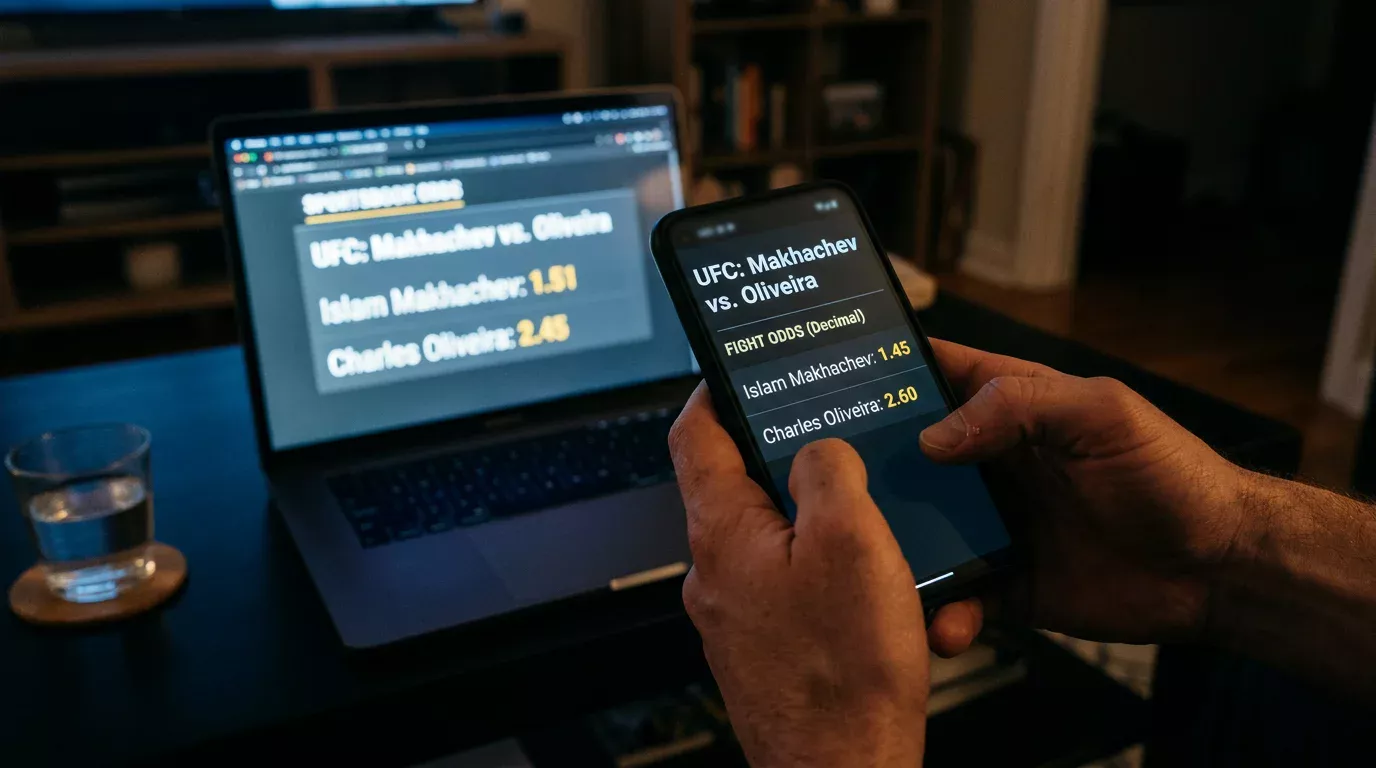
A UFC divisional outright market lists every plausible contender alongside the current champion, each priced at decimal odds reflecting the bookmaker’s assessment of their probability of holding the belt at a specified future date or, in some formats, at any point during the year. The champion is typically the shortest price; the top-ranked contender sits next; and the field extends to long shots priced at 15.00 or above.
These markets are open-ended in most UK bookmaker formats, meaning the bet settles whenever the specified condition is met (fighter wins the title) or when the market closes without the condition being met (fighter retires, moves division, or the bookmaker delists the market). Some operators structure outright UFC markets with a defined settlement window — “champion at end of 2026” — while others leave the timeline indefinite. The difference matters for capital management: a bet that might take eighteen months to settle ties up capital that could be deployed on individual fight markets in the interim.
Outright prices move more slowly than fight-specific markets because they aggregate multiple future events rather than a single bout. A contender’s outright price might shorten after a dominant win, but the move is muted by the remaining uncertainty about whether they will receive the title shot, who they will face, and when the fight will take place. This inertia creates pricing opportunities that are harder to find on fight-specific markets where the information is more immediately priced in.
Booking Certainty as the Primary Driver
The single most valuable signal in outright UFC betting is whether a title fight has been officially announced. Before the announcement, a contender’s outright price reflects the bookmaker’s estimate of two probabilities multiplied together: the probability of receiving the title shot and the probability of winning it. After the announcement, the first probability collapses to near certainty, and the outright price should theoretically converge toward the contender’s fight-specific moneyline odds.
In practice, this convergence is slow. I have logged cases where a contender’s outright price remained 15% to 20% wider than their fight-specific moneyline for several days after the title bout was officially announced. The lag exists because outright markets receive less bookmaker attention than fight-specific markets, and the odds are updated less frequently. For bettors who recognise the announcement as a catalyst, this lag is a window to lock in a price that will shorten as the market catches up.
UFC posted record annual revenue of $1.406 billion in 2024, and the organisation’s matchmaking reflects both competitive and commercial logic. A contender with a massive social media following may receive a title shot ahead of a higher-ranked but less marketable rival. Understanding the promotional incentives that drive matchmaking decisions is itself an analytical skill that feeds into outright pricing — a fighter who generates pay-per-view buys is more likely to be booked, and that booking probability is underpriced when the market focuses solely on ranking position.
Pricing at the Top of the Division
Champion and top-contender pricing in outright markets follows a predictable pattern. The champion is priced as the favourite — typically between 1.80 and 2.50 depending on dominance. The number-one contender sits at 3.00 to 5.00. The field from rank three downward extends rapidly, with fighters outside the top five often priced at 10.00 or longer.
A.J. Riot at Fight Matrix noted that UFC gross gaming revenue has grown at an estimated compound annual rate exceeding 18% over the past five years, outpacing almost every other major sport. That growth rate drives expansion of betting markets, including outright futures that were previously unavailable on UK sportsbooks. The deepening of these markets means more contenders are priced, more divisions are covered, and more opportunities exist for bettors who specialise in a single weight class.
The edge in divisional pricing tends to sit in the middle tier — fighters ranked three through seven who are not the immediate next challenger but who have a plausible path to a title shot within the settlement window. These fighters carry enough uncertainty to be priced at 6.00 to 12.00, which offers substantial upside if your assessment of their booking probability and fighting ability diverges from the market’s. The champion and the obvious next challenger are priced tightly enough that the margin eats most of the available edge.
Hedging an Outright Position
One structural advantage of outright betting is the ability to hedge as the path to the title clarifies. If you backed a contender at 8.00 before their interim bout was announced, and they win that bout decisively, their outright price might shorten to 3.50. You can now lock in a guaranteed profit by placing a hedge bet against them in the title fight — backing the champion on the fight-specific moneyline to offset the outright position.
The maths of the hedge is straightforward. Your outright bet at 8.00 returns eight times your stake if the contender wins the title. If their title-fight moneyline against the champion is 2.50, you can calculate a hedge stake on the champion that guarantees a profit regardless of outcome. The guaranteed profit is smaller than the potential full payout, but it eliminates the downside risk entirely.
Whether to hedge or hold depends on your confidence in the contender’s ability to win the title fight specifically. If your original outright position was based on booking probability rather than matchup conviction, hedging makes sense — you have captured the value from the booking catalyst and are now transferring the matchup risk to a separate position. If your conviction extends to the specific fight, holding the outright and riding the position to settlement maximises expected value at the cost of higher variance.
Holding Period and Liquidity Constraints
The longest-term bet in MMA is a divisional outright on a contender who is not yet booked for a title fight. These positions can sit for six, nine, or even twelve months before settling, during which your capital is tied up and unavailable for other bets. On a bankroll where capital deployment matters, the opportunity cost of holding a long-term outright is real and should be factored into the decision.
UFC’s seven-year media rights deal with Paramount, worth $7.7 billion, guarantees a dense event calendar through 2032. That density means title fights are booked more frequently than in eras where champions defended once or twice a year, which compresses the holding period for outright bets. A contender backed today might face the champion within four to six months rather than twelve, reducing the capital lockup and increasing the annualised return on the position.
Cash-out availability on outright UFC bets varies by operator. Some UK bookmakers offer cash out on futures positions; others do not. Where cash out is available, the margin is typically wider than on fight-specific cash out because the remaining uncertainty is higher. If liquidity matters to your bankroll management, confirming cash-out availability before placing an outright position is a practical step that preserves your ability to exit the trade if circumstances change. For bettors who also track value identification on fight-specific markets, balancing capital between short-term fight bets and long-term outright positions is an ongoing allocation decision that deserves as much attention as the analysis of any individual fight.
How long does a UFC outright title bet typically take to settle?
Settlement depends on when the fighter receives and competes in a title bout. For contenders who are already the announced next challenger, settlement can come within two to four months. For contenders ranked three to seven without an announced title fight, the holding period can extend to six to twelve months or longer. Some operators set a defined settlement window (e.g., ‘champion at end of 2026’), while others leave the market open-ended until the condition is met or the market is delisted.
Can I cash out a UFC futures position partway through a title cycle?
It depends on the operator. Some UK bookmakers offer cash out on outright UFC futures; others do not. Where available, the cash-out margin is typically wider than on fight-specific bets because the remaining uncertainty is higher. The value of the cash-out offer will increase if your contender wins interim bouts or is officially announced for a title fight, and decrease if they lose or suffer an injury. Check your bookmaker’s futures cash-out policy before placing the position if early exit flexibility is important to your bankroll strategy.
Written by the editors at mma Betting Websites.