UFC Underdog Betting: Pricing Upsets in the Octagon
 Available in US
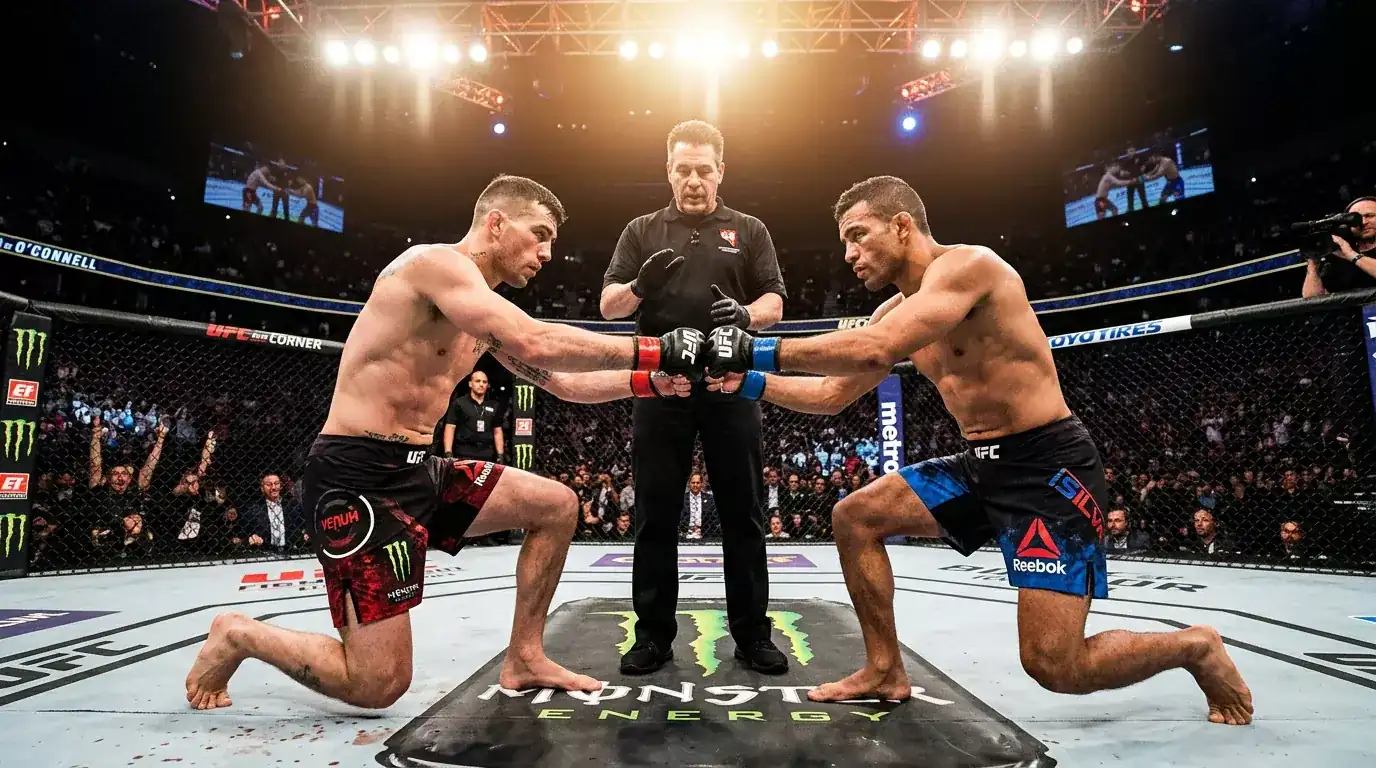
MMA produces more upsets than almost any other sport you can bet on, and that is not a cliche — it is a structural feature. A single clean shot can end a fight regardless of who the favourite is, which means the floor on underdog probability is higher in the octagon than on a football pitch or a tennis court. I have built a significant portion of my MMA returns on underdog bets over the past nine years, and the lesson that took longest to learn was this: backing underdogs is not about liking long shots. It is about finding fights where the public has pushed the favourite’s price below its true probability.
The UFC Upset Rate in Context
Every year, the UFC’s roster of events grows. The number of major MMA events globally has risen from roughly 100-110 in 2020 to over 180 by 2025, and UFC accounts for the majority of headline cards. Across that expanding sample, the underdog win rate on moneyline markets has hovered between 35% and 42% over the past five years, depending on how you define “underdog” and which events you include. If you draw the line at any fighter priced above 2.00 in decimal, the win rate sits closer to 40%.
Compare that to football, where the away-team underdog win rate in the Premier League is closer to 28-30%. The gap exists because MMA is a lower-sample, higher-variance sport. A football team plays 38 league matches a season; a UFC fighter competes two or three times a year. Less data means less pricing efficiency, which means more room for the underdog to be mispriced. UFC gross gaming revenue has grown at an 18%+ annual rate over five years, attracting sharper pricing models from bookmakers, but the structural variance of combat sports limits how efficient those models can ever become.
Stylistic Edges That Create Underdog Value
The question is never “is this fighter an underdog?” — the line already tells you that. The question is “does this fighter’s style create a specific path to victory that the market has underweighted?” I call this the stylistic discount, and it appears most frequently in three scenarios.
First: the power puncher against the volume striker. Volume strikers win more rounds and produce more dominant stat lines, which biases both public perception and model outputs. But a single-shot knockout artist does not need to win rounds. They need to land once. If the power puncher has a genuine one-punch equaliser and the volume striker has a history of being hurt by counter shots, the underdog price may overstate the favourite’s true edge.
Second: the superior grappler against a striker who has never been tested on the ground at the elite level. Wrestling dominance is the most underappreciated weapon in MMA betting because casual fans and the algorithms that track public sentiment focus on striking highlights. A wrestler who can dictate where the fight takes place neutralises the striker’s advantage entirely, and the betting public often does not reflect that reality until the fight starts.
Third: the late-replacement underdog who is physically larger or stylistically wrong for the original opponent’s game plan. Late replacements come in at longer prices because the market assumes preparation disadvantage, but the flip side is that the favourite has prepared for a completely different opponent and now faces a style they did not train for. That preparation mismatch can offset the camp disadvantage, and the line rarely adjusts enough.
Public Money and the Favourite Bias
Chad Yeomans, Betway’s Head of Global Comms, once remarked after a string of favourite failures at Cheltenham that bookmakers were not complaining — it was rare for so many fancied selections to lose in a single meeting. The MMA equivalent happens with less fanfare but more regularity. The betting public gravitates toward favourites because favourites feel safe, and that gravitational pull compresses the favourite’s price below its true value while inflating the underdog’s price above its true value.
This is the favourite-longshot bias in action. Research across multiple sports has shown that short-priced favourites tend to be overbet and long-priced underdogs tend to be underbet, but the interesting wrinkle in MMA is that the bias is strongest on main events and numbered cards — the fights with the highest visibility and the most casual betting volume. Prelim underdogs, by contrast, attract less public attention and are therefore priced more efficiently. My best strategic results on underdog plays come from main card bouts where public money has clearly pushed the favourite’s price too low.
Staking on Plus-Money Selections
Backing underdogs demands a different staking approach than backing favourites. When you are betting on fighters priced at 2.50-5.00, you will lose more often than you win. If your standard unit on a favourite is £20, staking £20 on every underdog will produce larger drawdowns and more consecutive losing streaks. This is not a flaw in the strategy — it is the mathematical reality of lower hit rates.
I use a reduced unit size for underdogs: 50-60% of my standard stake. On a £20 base unit, an underdog gets £10-12. This keeps the bankroll volatility manageable while still allowing the higher payouts on winning bets to compensate for the higher loss frequency. Over a 100-bet sample, a 38% win rate at an average price of 3.00 with a £12 stake produces a positive ROI if the average price reflects genuine value. The key is that “if” — volume alone does not create profit. Each underdog selection needs a specific thesis.
Red Flags That Kill Underdog Spots
Not every mispriced underdog is worth backing, and I have learned to recognise situations where the price is long for a good reason. The first red flag is age-related decline. A veteran fighter priced at 3.50 against a rising prospect might look like value on paper, but if that veteran’s recent performances show slower reaction times and reduced output, the price is reflecting a real deterioration that the historical record has not yet fully absorbed.
The second red flag is unexplained line movement. At UFC 324 in January 2026, the Johnson vs Hernandez fight was pulled after the line shifted by 234 points on suspicious activity. That is an extreme case, but smaller unexplained moves on an underdog — where the price shortens rapidly without any public information to explain it — should make you pause. If the line is moving toward the underdog without a clear catalyst, someone may know something you do not, and the “value” you see in the favourite’s suddenly longer price may be a trap.
The third red flag is geographic disadvantage on international cards. A fighter travelling across multiple time zones to compete on enemy territory faces real performance costs — disrupted sleep, unfamiliar environment, crowd hostility — that the line does not always fully price. Backing an underdog who also carries a significant travel burden is stacking two negative factors, and I have learned to pass on those spots even when the price looks tempting.
What is the historical UFC underdog win rate?
The UFC underdog win rate on moneyline markets — defined as any fighter priced above 2.00 in decimal odds — has ranged between 35% and 42% over the past five years. The exact figure varies by event tier, weight class, and how the sample is constructed, but the rate is consistently higher than in most team sports due to the inherent variance of individual combat.
Should I flat-stake or scale my UFC underdog bets?
Most experienced MMA bettors use a reduced flat stake for underdogs — typically 50-60% of their standard unit size for favourite bets. This controls bankroll volatility during the inevitable losing streaks that come with lower hit rates. Scaling by confidence level is an alternative, but it introduces subjectivity that can erode discipline. A reduced flat stake keeps the process mechanical and lets the higher average payout on winners compensate for the higher loss frequency.
Written by the editors at mma Betting Websites.