Cash Out on UFC Bets: When the Bookmaker’s Offer Beats Holding
 Available in US
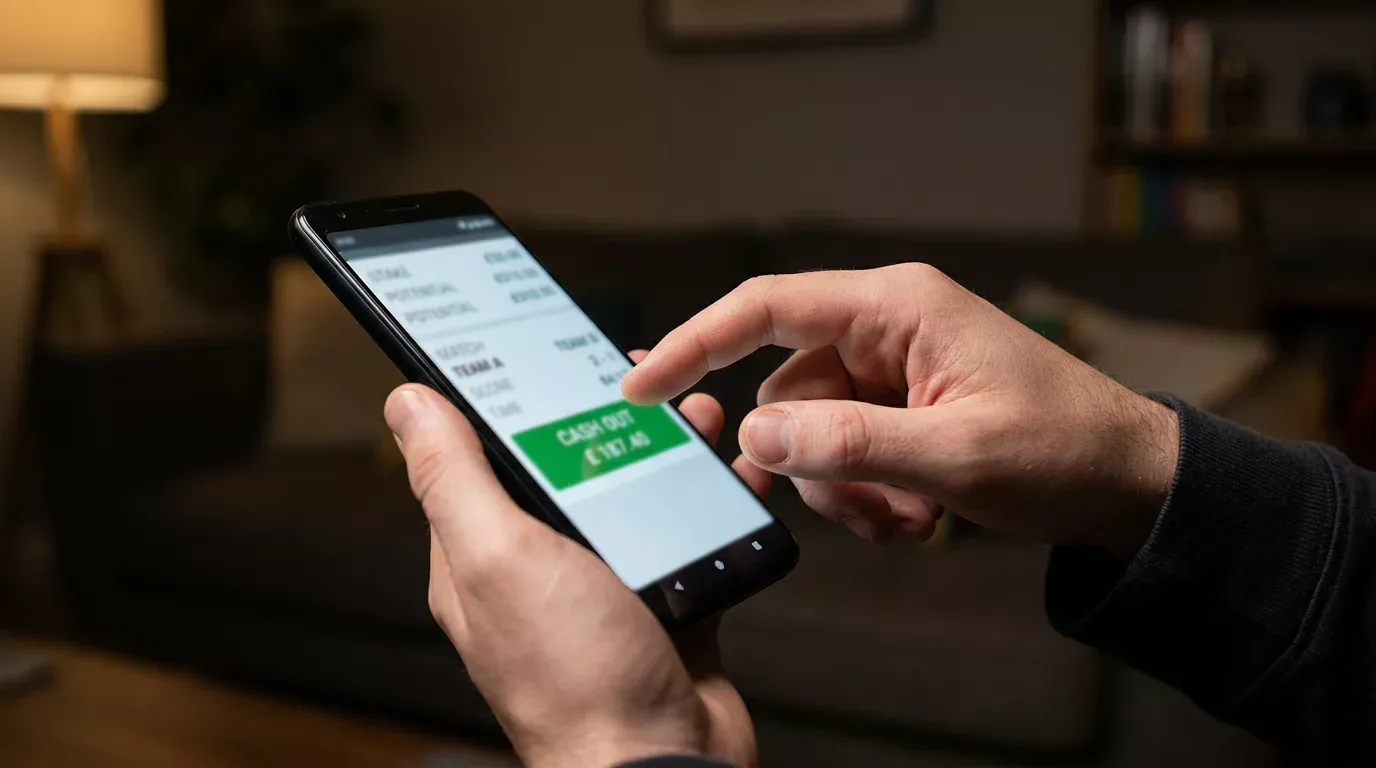
Every cash-out offer is a bet within a bet. The bookmaker is offering you a guaranteed settlement based on the current implied probability of your position, minus a margin that compensates them for closing out the liability early. That margin means the cash-out value is almost always lower than the theoretical value of your position if you calculated it from the live odds. Accepting cash out is not inherently wrong — but accepting it without understanding what you are giving up is a reliable way to leak value across a season of UFC wagering.
How Cash Out Gets Priced
The bookmaker calculates your cash-out offer by working out what your bet is worth at the current market price and then subtracting their own margin. If you placed a £20 bet on a fighter at 3.00 (potential return £60) and that fighter’s price has shortened to 1.80 after a dominant first round, the theoretical value of your position is approximately £33 — because at the new price, the market now expects the fighter to win more often than when you placed your bet. The bookmaker might offer you £28 to £30, keeping £3 to £5 as their early-settlement fee.
The UK sports betting market generates roughly £2.48 billion in annual gross gaming yield, and cash-out margins contribute a meaningful share of that revenue. Bookmakers are not offering cash out as a customer service gesture. It is a product that generates income, and the pricing reflects that commercial reality. The gap between the theoretical value and the cash-out offer typically ranges from 5% to 15%, widening on lower-liquidity markets like UFC undercard fights where the bookmaker carries more pricing uncertainty.
Understanding this gap is the first step toward making rational cash-out decisions. If you would not place a new bet at the implied odds embedded in the cash-out offer, then accepting it is mathematically equivalent to making that bet — and declining it. The cash-out offer is just a price in disguise.
Partial Cash Out
Most major UK bookmakers now offer partial cash out on UFC bets, allowing you to settle a portion of your position while leaving the remainder active. If your full cash-out offer is £30, you might choose to cash out £15 and leave the other half running. This locks in a partial profit while maintaining exposure to the potential full payout.
Partial cash out is the most underused feature in MMA betting. It allows you to manage risk without making the all-or-nothing decision that full cash out forces. In a fight where your fighter won the first round convincingly but faces a historically dangerous second-round opponent, cashing out 50% and holding 50% captures the dominant position while hedging against the specific risk you have identified.
The margin on partial cash out is calculated per-unit, which means the effective margin is identical to full cash out. You are not penalised extra for splitting the settlement. The only practical limitation is minimum settlement amounts — some operators require the cashed-out portion to be at least £1 or a similar floor, which prevents micro-splits on small-stake bets.
Live Cash Out vs Pre-Match Cash Out
Pre-match cash out operates on the movement of the line between when you placed the bet and the current market price. If you backed a fighter on Monday at 2.50 and by Friday after weigh-ins they have shortened to 1.90, the pre-match cash-out offer reflects that shift. The pricing is relatively stable because the line moves incrementally in response to new information.
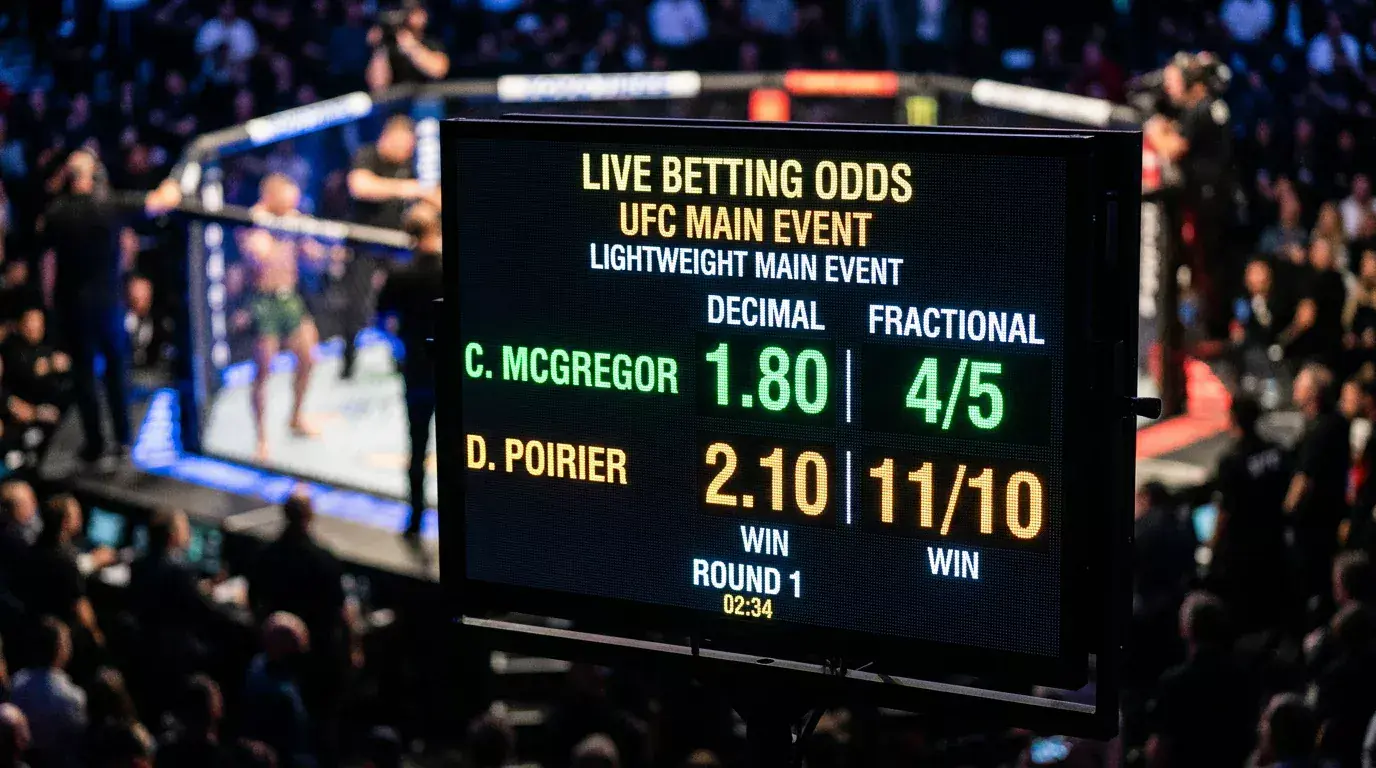
Live cash out during a UFC fight is a different animal. The line swings dramatically between rounds, after knockdowns, and following significant grappling exchanges. A fighter who was 2.50 pre-fight might be 1.30 after a dominant first round but snap back to 3.50 if they get dropped in the second. The cash-out offer updates in near real time but with a lag that the bookmaker uses as additional margin protection. During moments of high volatility — a fighter visibly hurt, a fight momentarily stopped for a cut — live cash out is frequently suspended entirely.
The suspension windows are the most frustrating aspect of live cash out. If you want to lock in profit after your fighter wins a round but the between-round window closes before the cash-out refreshes, you are back to holding. I have learned to make cash-out decisions before the round ends rather than waiting for the bell, because the system’s response time between rounds is often too narrow for deliberate decision-making.
When to Accept and When to Hold
Three scenarios justify accepting a cash-out offer on a UFC bet. First, new information has emerged that changes your assessment of the fight — a visible injury, a fighter who looks noticeably slower than expected, or a dominant grappling display that your pre-fight analysis did not anticipate. If your conviction has genuinely shifted, locking in a partial or full profit at the current price is rational even after accounting for the margin.
Second, drawdown control. If you are on a cold streak and a current position represents a disproportionate share of your remaining bankroll, cashing out reduces variance at a point where protecting capital matters more than maximising expected value. This is a bankroll management decision, not an analytical one, and it is perfectly valid under the right circumstances.
Third, hedging a correlated position. If you have two bets on the same card that interact — say, a moneyline bet on Fighter A and a separate over/under bet that benefits from a different outcome — and the first bet is winning but creating a scenario where the second bet is likely to lose, partial cash out on the first position can flatten the variance across your portfolio.
The scenario that does not justify cash out: emotion. If your fighter just survived a scare in round two and your pulse is elevated and you want to “take the money and run,” that is not a cash-out decision — it is a stress response. The mathematical value of your position has not changed because you felt anxious. UFC GGR has grown at a compound rate exceeding 18% per year, meaning the market is deep enough that short-term volatility within a single fight is normal and expected. Reacting to it with panic cash out is how bettors turn winning positions into below-value settlements.
Cash Out on Multi-Leg Tickets
Accumulator and parlay cash out behaves differently from single-bet cash out because the remaining legs add compounding uncertainty. If your five-fold has three legs settled and two remaining, the cash-out offer reflects the bookmaker’s current assessment of those two open legs, discounted by the margin on each.
The margin stacking on multi-leg cash out means the gap between theoretical value and offered value is wider than on singles. Each remaining leg carries its own pricing uncertainty, and the bookmaker protects against all of them simultaneously. A four-fold with one leg remaining might show a cash-out value that is 12% to 18% below the theoretical hold value, compared to 5% to 10% on a single.
For live UFC betting, multi-leg cash out becomes even more volatile. If one of your open legs is a live fight in progress, the cash-out offer swings with every exchange, and suspension windows apply to the entire ticket whenever that fight’s live market pauses. The practical result is that reliable multi-leg cash out during live UFC fights is difficult to execute precisely, and the pricing premium for the bookmaker’s added risk makes it less attractive than it first appears on the screen.
Why is the cash-out value lower than my implied current win amount?
Because the bookmaker deducts a margin from the theoretical value of your position when calculating the cash-out offer. This margin compensates the operator for closing the liability early and absorbing the remaining outcome risk. The gap typically ranges from 5% to 15% of the position’s implied value, widening on lower-liquidity markets like UFC undercard fights or in-play offers during moments of high volatility.
Can I cash out a UFC bet between rounds?
In principle, yes — most UK bookmakers update cash-out offers during the between-round break. In practice, the window is narrow. The system refreshes the price once the round ends, but the new offer may take ten to twenty seconds to populate, and the sixty-second rest period means you have limited time to evaluate and confirm. Cash out is frequently suspended during active fighting and during moments when a fighter is visibly hurt, so the between-round break is often the only reliable live window available.
Prepared by the mma Betting Websites editorial staff.