Style Match-up Analysis for MMA Betting: Wrestler vs Striker, Grappler vs Pressure
 Available in US
The old shorthand — wrestlers beat strikers, strikers beat grapplers, grapplers beat wrestlers — collapses the moment you apply it to a real fight card. MMA style analysis is a multi-axis problem where base discipline, cardio ceiling, cage-craft, coaching strategy, and fight-night mentality all interact. Ignoring any one of those layers while fixating on another is the most common analytical mistake in combat sports betting, and it costs more money than bad bankroll management ever will.
The Five Core Archetypes
Every MMA fighter can be loosely mapped onto one of five archetypes, though almost no modern fighter sits purely in one box. The pressure striker walks forward, throws volume, and wins by attrition. The counter-striker sits at range, waits for openings, and capitalises on the opponent’s mistakes. The offensive wrestler shoots for takedowns to impose top control and ground-and-pound. The submission grappler seeks the clinch or the mat to hunt for chokes and joint locks. And the all-rounder blends two or more of these disciplines without a dominant base, adjusting strategy per opponent.
For betting purposes, the archetype matters less than the hierarchy of skills within it. A pressure striker whose takedown defence is 85% presents a fundamentally different problem from one whose takedown defence sits at 55%. Both are “strikers” on a surface read, but only one can be safely expected to keep the fight standing against a high-output wrestler. The archetype gives you a starting point; the sub-skills within it give you the edge.
Millennials make up roughly 40% of the UFC fanbase, and the UK ranks among the top markets globally for interest in the sport. That demographic skews toward fighters they have seen in highlight reels, which tends to overvalue flashy strikers and undervalue methodical grapplers. The market often follows. When a dynamic knockout artist faces a grinding wrestler, the striker’s price is frequently shorter than the matchup warrants because casual betting flow inflates the name-recognition premium.
Wrestler vs Striker: The Classic Conflict
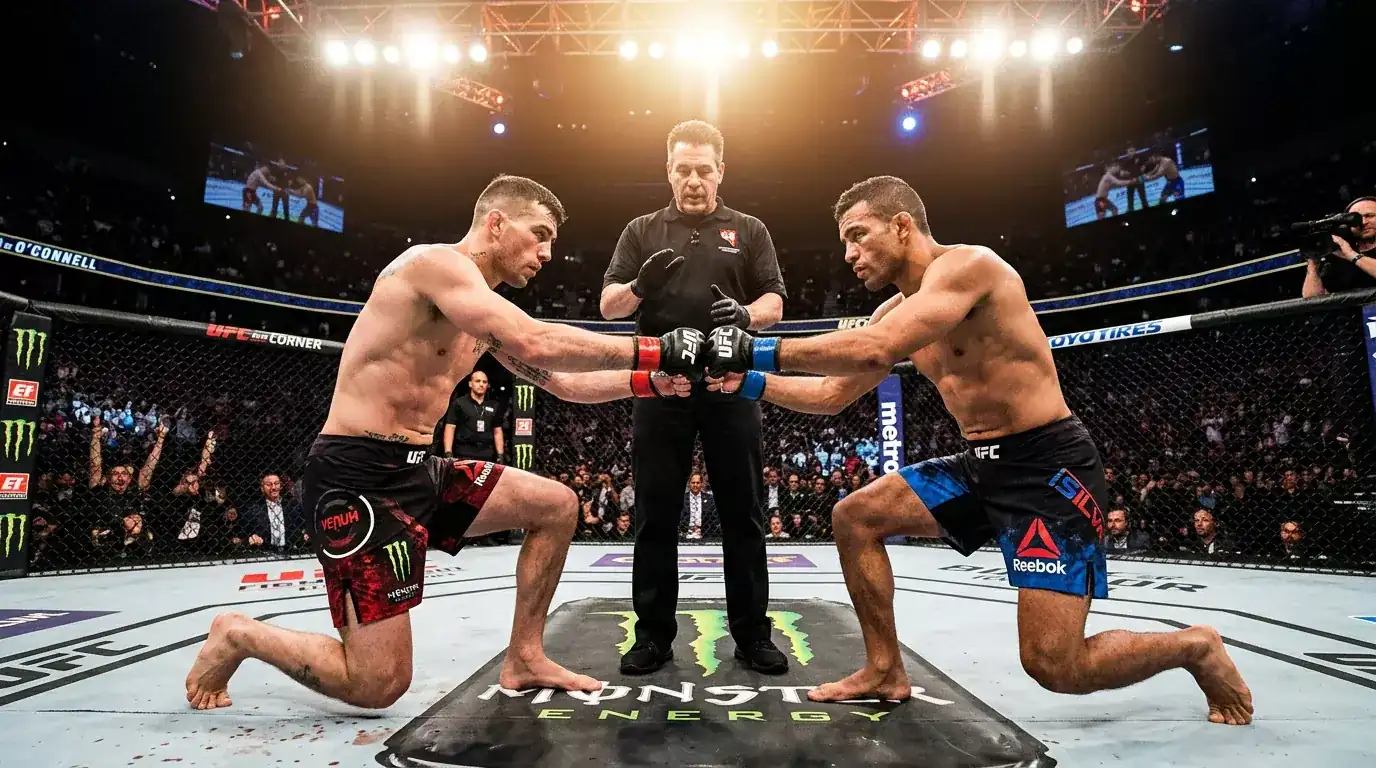
This matchup is the most studied in MMA, and it is also the most frequently mispriced. The conventional wisdom says the wrestler controls the fight, negates the striking, and grinds out a decision. But modern MMA has produced enough striker-over-wrestler upsets to complicate that narrative considerably.
The variable that decides this matchup more often than any other is the striker’s ability to create distance after a stuffed takedown. A striker who defends the shot but ends up clinched against the cage has won a battle but lost the position — the wrestler can chain attempts, throw short strikes from the clinch, and drain the striker’s energy even without completing a takedown. A striker who defends the shot and immediately circles to the centre of the octagon has genuinely neutralised the wrestling threat and reset the fight to a range where their advantage lives.
Takedown defence percentage is a useful starting point, but it masks critical context. A fighter with 78% takedown defence sounds solid until you check who they defended against. If their sample includes mostly other strikers who shoot opportunistically, that 78% will collapse against a Division I collegiate wrestler who chains shots and uses cage pressure to set them up. Conversely, a fighter with 65% takedown defence who has faced three elite wrestlers and kept two of them at bay for entire rounds is a much better bet in this archetype clash.
I also weight cardio heavily in wrestler-versus-striker fights. Wrestling offence is expensive in terms of energy expenditure, and a striker who survives the wrestling pressure in rounds one and two often finds a fading opponent in round three. If the fight is scheduled for three rounds, the wrestler has a narrower window. If it is a five-round main event, the dynamic shifts again because the wrestler can afford to lose middle rounds and push the pace in the championship rounds.
Grappler vs Pressure Fighter
This matchup is less glamorous but produces some of the most exploitable pricing in MMA. Pressure fighters thrive on forward movement, high output, and forcing their opponent into a reactive defensive posture. Submission grapplers thrive on exactly that — opponents moving forward into range where clinch entries, trip setups, and scramble opportunities present themselves.
The pressure fighter’s aggression becomes a liability against a grappler who can convert that forward momentum into positional advantages on the mat. I have seen this pattern repeat across divisions: a pressure striker walks into a body lock, ends up on the mat, and spends the round defending submissions rather than throwing the combinations that define their style.
UFC GGR has grown at an estimated compound annual rate exceeding 18% over the past five years, and the expansion of the event calendar means more matchups of this type appear on cards that previously would have been limited to regional circuits. The deeper the card, the more frequently you encounter grappler-versus-pressure-fighter pairings on the early prelims, where market liquidity is thin and pricing is less efficient.
The pricing opportunity exists because casual bettors gravitate toward the pressure fighter’s visible aggression. Output looks impressive on a highlight reel. Control time on the mat does not. But judges score effective grappling, and a submission grappler who secures two takedowns per round with meaningful control time can win a decision that the striking stats alone would never predict.
Southpaw vs Orthodox and the Stance Edge
Stance matchups carry a genuine statistical edge in MMA, though the magnitude is smaller than most tipster threads suggest. A southpaw facing an orthodox fighter creates a lead-foot collision that changes angles, exposes the liver to the rear hand, and disrupts the jab-cross combinations that most orthodox fighters build their offence around.
The edge is most pronounced when the orthodox fighter has little experience against southpaws. In divisions where left-handed fighters are rare — heavyweight, for instance — an orthodox fighter might reach the UFC having faced only one or two southpaws across their entire amateur and professional career. That lack of pattern recognition shows up in the first round as hesitation, missed timing, and defensive errors that a well-prepared southpaw can exploit.
For betting, the southpaw edge is a tiebreaker rather than a primary factor. If the stylistic analysis, statistical profile, and form check all point to a close fight, a southpaw advantage can push the assessment toward the left-handed fighter. But it rarely justifies overriding a clear skill gap in the other direction. The stance advantage matters most when the fighters are otherwise evenly matched, which is precisely the scenario where even a small edge translates into meaningful value on the price.
Pace and Cardio as the Ultimate Tiebreaker
When two fighters are stylistically comparable — similar base, similar output, similar defensive metrics — the tiebreaker almost always comes down to who can sustain their pace deeper into the fight. Cardio is the great equaliser in MMA. A technically inferior fighter who maintains output through round three can outpoint a technically superior fighter who fades after the first five minutes.
Measuring cardio from public data is imprecise but not impossible. Significant strike output per round, broken out across a fighter’s recent three-to-five bout sample, reveals decline curves that are remarkably consistent. A fighter whose round-three output drops by 40% relative to round one has a structural cardio limitation that repeats across opponents. A fighter whose output holds steady or even increases in later rounds has a conditioning advantage that the market rarely prices adequately.
Altitude and climate also factor in, though less so for UK bettors wagering on events held primarily in Las Vegas, Abu Dhabi, or major US arenas. UFC events at altitude — Mexico City and Denver being the two notable venues — magnify cardio differences because the reduced oxygen availability punishes fighters who already operate near their metabolic ceiling. When a card is held at altitude and two evenly matched fighters meet, the one with the better conditioning history holds a disproportionate advantage that the market frequently underweights.
I incorporate pace analysis into every fight assessment, but it carries the most weight when the available statistics point to a close matchup. In lopsided fights — where one fighter is clearly more skilled, better credentialed, or coming off dominant performances — cardio matters less because the fight is unlikely to reach the rounds where conditioning differences become decisive.
How do I weigh wrestling base vs striking output in UFC betting?
Start with the striker’s takedown defence rate, but adjust for the quality of wrestlers they have faced. If the striker has defended against credentialed wrestlers and demonstrated the ability to circle off the cage after stuffing shots, their striking base likely controls the fight. If their takedown defence sample comes primarily from other strikers, treat that number sceptically against a dedicated wrestler. Cardio and fight length are secondary factors that can shift the balance depending on whether the bout is three or five rounds.
Does southpaw stance still create a real betting edge?
Yes, but as a tiebreaker rather than a primary factor. The edge is most meaningful when the orthodox fighter has limited experience against southpaws and the fight is otherwise close to a coin flip on stylistic grounds. In those spots, the southpaw’s angular advantage in the first round can produce enough early damage or scoring to tilt the outcome. Against fighters who regularly face and prepare for southpaws, the stance edge diminishes to near zero.
Prepared by the mma Betting Websites editorial staff.