UFC Reload Promotions for Existing UK Customers: What Bookmakers Actually Offer
 Available in US
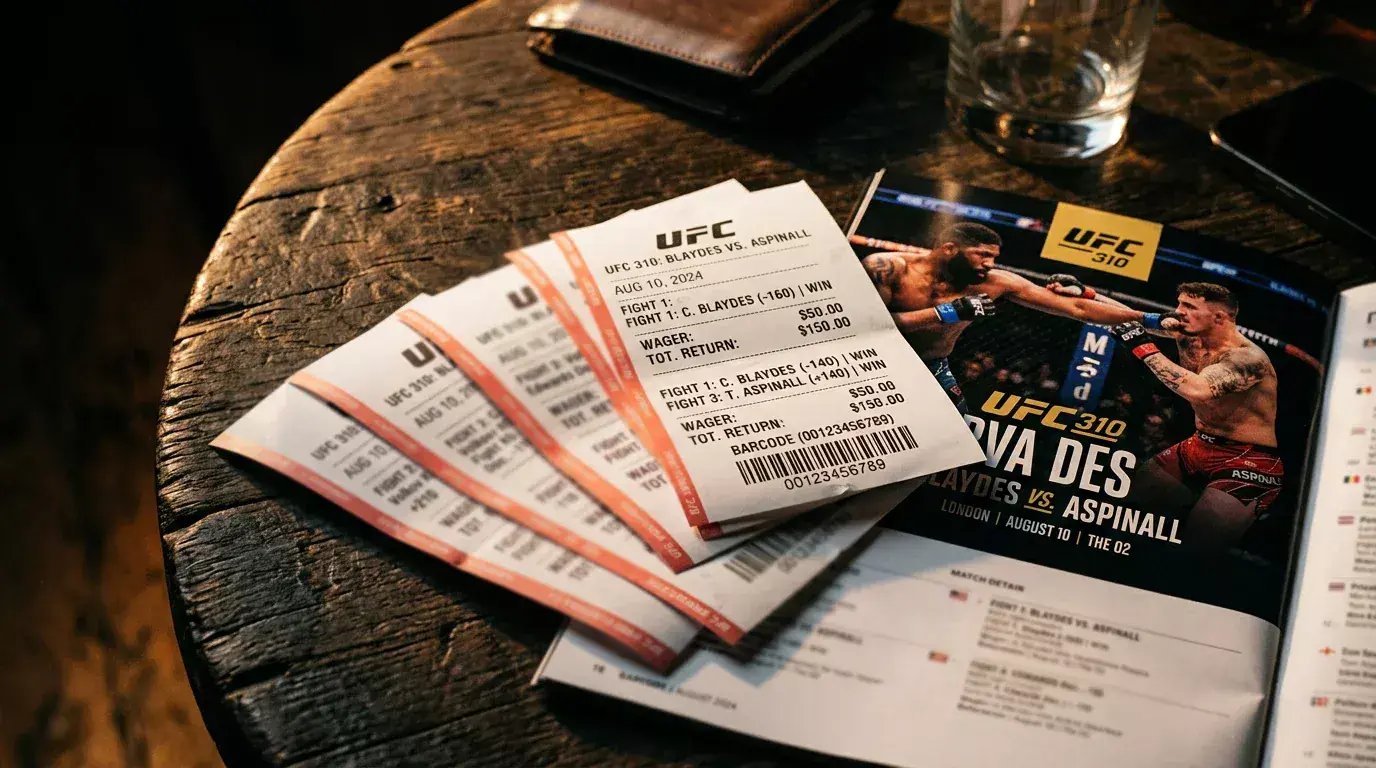
Welcome bonuses get the headlines, but reload promotions for existing customers generate more cumulative value across a year of UFC betting. Price boosts, acca insurance, fight-night free bets, and loyalty tiers are all recurring instruments that compound over fifty-plus cards. A bettor who extracts £5 of expected value from a weekly price boost across twelve months has gained more than the £20 welcome bonus ever delivered. The trick is knowing which promotions carry genuine value and which are marketing dressed as generosity.
Price Boost Mechanics
A price boost is a temporary enhancement of the odds on a specific selection, offered by the bookmaker as a promotional incentive. A UFC moneyline favourite at 1.60 might be boosted to 1.80 for the first £10 staked. The boost applies to the first qualifying bet only, with a maximum stake that is usually capped between £10 and £25.
The value of a price boost depends entirely on whether the boosted price exceeds the fair odds for the selection. If a fighter’s true probability is 55% (fair decimal odds of 1.82) and the bookmaker boosts their price from 1.60 to 1.80, the boost brings the price close to fair value but does not quite cross into positive expected value territory. If the boost takes the price to 2.00 on the same fighter, you now have a +EV bet that the market would not otherwise offer.
I evaluate every price boost by calculating the implied probability at the boosted price and comparing it against my own assessment of the fighter’s win probability. If the boost creates a gap of 5% or more in my favour, I take it. If the boosted price merely reduces the bookmaker’s margin without crossing into value, I skip it. The discipline of treating a price boost as a bet rather than as a gift is what separates profitable use from recreational use.
One pattern worth noting: bookmakers tend to boost popular fighters on main events, where public interest is highest. These boosts attract volume but are often calibrated so that the boosted price still sits below fair value. Boosts on undercard fights or secondary markets — when they appear — are less carefully calibrated because fewer customers notice them, which is where the genuine value tends to hide.
Acca Insurance on UFC Cards
Accumulator insurance returns your stake as a free bet if one leg of a qualifying accumulator loses. The typical requirement is a four-fold or five-fold accumulator at minimum odds per leg (usually 1.20 or above), with a maximum refund cap. If one leg loses and all others win, you receive a free bet equal to your original stake.
For UFC cards, acca insurance is a structurally favourable promotion because card-wide accumulators carry inherent volatility. A single upset on a twelve-fight card can bust a five-fold that looked comfortable through the first four legs. The insurance effectively gives you one free miss, which mathematically reduces the variance of the accumulator without reducing the potential payout.
The free-bet refund carries the same profit-only settlement as welcome free bets: if you win the refund bet, you keep the profit but not the stake. This reduces the effective value of the insurance, but the net expected value is still positive in most scenarios. I use acca insurance selectively — only on cards where I have identified four or five strong moneyline positions and the insurance is available without onerous minimum-odds requirements.
Fight Night Specials
Some UK bookmakers run fight-night-specific promotions tied to major UFC events. These might include enhanced odds on a headline fight, a free bet for placing a qualifying wager on the main event, or a money-back special if a fight ends in the first round. The format varies by operator and by event, with the largest promotions typically tied to numbered UFC pay-per-view cards.
UFC Freedom 250, scheduled for June 2026 at the White House South Lawn and expected to become the most-watched UFC event in history, is exactly the kind of card that generates the deepest promotional activity from UK operators. Major cultural events attract casual bettors who would not normally wager on MMA, and bookmakers deploy aggressive promotions to capture that influx. For regular UFC bettors, the promotional density around marquee events creates the highest-value windows of the year.
The key to extracting value from fight-night specials is reading the terms before the promotion launches. Most operators announce their fight-night promotions three to five days before the event, which gives you time to assess whether the specific terms — minimum stake, qualifying odds, eligible markets — align with bets you were already planning to place. A promotion that requires you to bet outside your analysis to qualify is a cost, not a benefit.
Loyalty and Tier Programs
Several UK bookmakers operate loyalty or VIP tier programs that reward cumulative betting activity with enhanced promotions, reduced margin on selected markets, higher maximum stake limits, and dedicated account management. These programs are invitation-based at the higher tiers and earn-based at the lower tiers, with progression typically tied to total volume wagered over a rolling period.
For MMA bettors, the volume required to reach meaningful loyalty tiers is difficult to achieve through UFC betting alone. A bettor placing three to five bets per card at £20 to £50 per bet generates roughly £5,000 to £12,000 in annual turnover — which at most operators qualifies for entry-level loyalty benefits but not for the enhanced tiers where the real value sits. Bettors who also wager on other sports reach those tiers faster, and the cross-sport loyalty benefits then apply to their UFC bets.
The most valuable loyalty benefit for UFC bettors is increased maximum stake limits. Standard limits on MMA markets can be restrictive, particularly on undercard bouts or props. A loyalty tier that raises your maximum from £100 to £500 on UFC moneylines meaningfully increases your ability to deploy capital when you identify a strong edge. UFC sponsorship revenues reached $314 million in 2025, reflecting the sport’s growing commercial profile, and operators who invest in MMA-specific loyalty benefits are responding to that growth by retaining higher-value MMA customers.
Tracking Promotional Expected Value
The difference between a bettor who extracts value from promotions and one who simply participates in them is tracking. I maintain a simple log of every promotion I use: the operator, the promotion type, the qualifying bet, the bonus received, the bet placed with the bonus, and the outcome. Over a quarter, this log tells me which operators deliver consistent promotional value and which offer promotions that look attractive on paper but rarely produce a positive return after wagering requirements.
The log also prevents double-counting. If you are tracking your overall UFC betting ROI, promotional value should be separated from analytical edge. A month where you showed a 5% ROI might decompose into 3% from analytical edge and 2% from promotional extraction. Without separating the two, you risk overestimating your analytical performance and understating the contribution of promotions, which matters when deciding how to allocate time between analysis and promotional optimisation.
How do UFC price boosts compare to natural line shopping?
Price boosts and line shopping serve different functions. Line shopping finds the best natural price across multiple bookmakers and can be applied to any bet at any stake. A price boost offers an artificially enhanced price on a specific selection, capped at a maximum stake. In practice, the best approach is to combine both: check whether the boosted price at one operator is better than the natural best price across your other accounts. If the boost exceeds the best available natural price by a meaningful margin, it is worth taking. If the natural price elsewhere is already close to the boosted level, the boost adds little incremental value.
Are reload promotions worth the deposit they require?
That depends on whether you would bet on the qualifying event anyway. If a reload promotion requires a £10 qualifying bet on a UFC main event, and you were already planning to bet on that event, the promotion adds value at no marginal cost. If the promotion requires you to bet on a card you have no analytical position on, the qualifying bet is a speculative outlay that may negate the value of the free bet or bonus it unlocks. The best reload promotions align with your existing betting calendar rather than pulling you into additional activity.
Prepared by the mma Betting Websites editorial staff.