Round Betting on UFC Fights: Picking the Exact Round of a Finish
 Available in US
Round markets carry the fattest margins on any UFC card, and they demand more from you than any other bet type. You are not just predicting who wins or how — you are predicting when, down to a five-minute window. That requires understanding the length of the fight, the pressure style of each competitor, and the physical decline curve that separates a first-round finisher from a late-round closer. I have been working these markets for the better part of a decade, and the single biggest lesson is this: round betting rewards patience and punishes volume.
How Exact-Round Betting Works
The first time I placed an exact-round bet, I picked a heavyweight to win in round one at 3.50. He did. I felt like a genius. Then I spent the next three months chasing that feeling across every card and bled my round-betting bankroll dry. That early win taught me the wrong lesson — that round picking is about instinct. It is not. It is about structure.
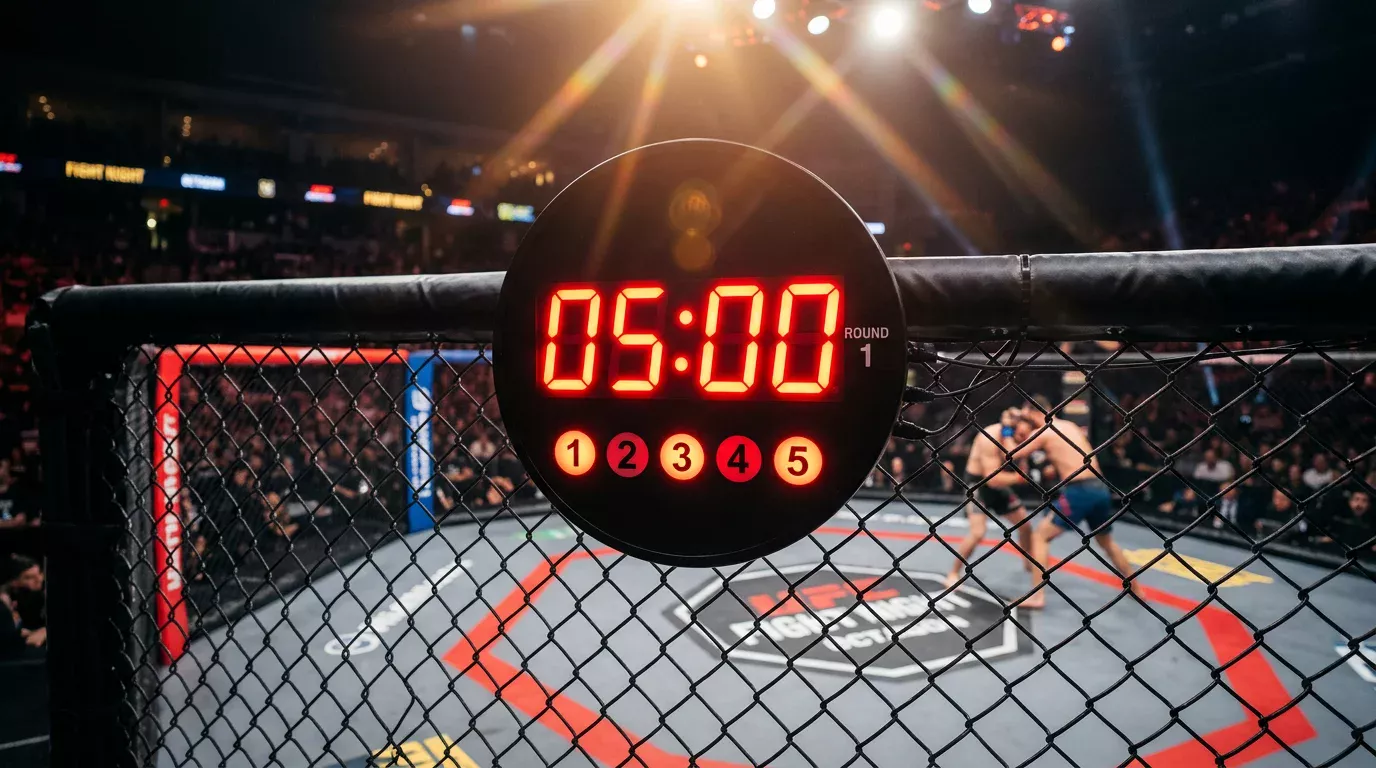
An exact-round bet asks you to name the specific round in which a fighter wins. On a three-round fight, you have six possible selections: Fighter A in round one, two, or three, and Fighter B in round one, two, or three. On a five-round main event, that expands to ten selections, plus the decision outcome. Each selection carries its own price, and those prices are not evenly distributed. Round one finishes are typically the shortest-priced because first-round stoppages are the most common individual-round outcome across the UFC roster. As you move into rounds two and three, prices lengthen because the probability of a finish in any specific later round drops — fighters who survive the early exchanges tend to settle into a rhythm.
The bookmaker builds these prices by combining the overall finish probability with a round-distribution model. That model draws on historical data: how often does Fighter A finish opponents, and in which rounds? If a fighter has four first-round knockouts and zero late finishes, the round-one price will be significantly shorter than round three. Your job is to assess whether that distribution model is accurate or whether it is over-indexing on a small sample.
Round Group Markets
Not every bookmaker offers exact-round pricing on every fight. Prelim bouts and lower-profile cards often get round group markets instead: rounds 1-2, rounds 3-4, rounds 5-6 on a three-round fight compressed into broader buckets. The prices are lower than exact-round because the probability window is wider, but the analysis is similar.
I actually prefer round groups on fights where my thesis is directional but not precise. If I believe a pressure wrestler will grind down a striker but I cannot pin the finish to a single round, backing “Fighter A in rounds 2-3” at 3.80 is a more honest expression of my view than guessing round two at 6.00. The group absorbs my uncertainty, and the price still compensates for the specificity required. Round groups also avoid the frustration of being one round off — a feeling every round bettor knows intimately.
Championship Rounds and the Five-Round Factor
Five-round main events and title fights change the round-betting equation fundamentally. The additional ten minutes of fight time redistribute probability away from the decision outcome and into rounds four and five, where fatigue creates finishing opportunities that simply do not exist in a three-round bout. UFC Freedom 250, scheduled for June 2026 at the White House South Lawn and expected to become the most-watched UFC event in history, will feature five-round title fights where championship-round finishes could redefine several divisional records.
I pay special attention to fighters whose finishing rate increases in later rounds. A cardio-dominant pressure fighter who wears opponents down before stopping them in rounds three through five is a specific archetype, and the round-betting market does not always price that archetype correctly. The model looks at overall finish rate, but a fighter who finishes 60% of their wins in the championship rounds is a fundamentally different proposition from one who finishes 60% of their wins in round one. Same percentage, completely different round distribution, completely different pricing implications.
How Bookmakers Price Round Markets
Margins on round betting are brutal — and deliberately so. A method-of-victory market might carry a 6-8% overround. An exact-round market on the same fight can push past 15-20%. The bookmaker knows that round betting attracts recreational punters chasing big payouts, and the margin reflects that customer profile. UFC gross gaming revenue has grown at a compound annual rate exceeding 18% over five years, and that growth has expanded the range of round markets available, but it has not compressed the margins.
What this means in practice is that you need to be more selective on round bets than on any other market. A moneyline bet at 5% overround can tolerate moderate edge. A round bet at 15% overround requires genuine informational advantage — a camp insight, a pacing pattern the model has not absorbed, a physical tell from weigh-in footage — to break even over time. I allocate no more than 10% of my fight-night bankroll to round markets, and most cards I skip them entirely.
Pacing Archetypes That Shape Round Prices
Every fighter falls into a pacing archetype, and recognising it is the single most useful skill for round betting. The fast starter throws everything in round one, fades if the fight extends, and either finishes early or gets finished late. The slow builder conserves energy, probes in the first two rounds, and escalates pressure when the opponent tires. The metronome outputs the same volume and intensity in every round, which pushes fights to decision unless the opponent breaks first.
When two fast starters meet, round one becomes the most probable finish point by a wide margin, and the round-one price should be the shortest on the board. When a fast starter faces a slow builder, the round distribution flattens — early rounds favour the starter, late rounds favour the builder, and the middle rounds become a coin-flip zone where neither archetype has a clear edge.
The most profitable round-betting spots I have found over nine years come from archetype mismatches that the market has not priced correctly. A slow builder facing a fast starter whose cardio has visibly declined in recent fights is a late-round finish waiting to happen, and the round four or five prices on those matchups frequently offer real value. But you need to watch the fights, not just read the stats. Pacing is visible on tape in a way that spreadsheets cannot capture.
Why are exact-round UFC bets priced so heavily by bookmakers?
Exact-round markets carry high margins — often 15-20% overround — because they attract recreational bettors chasing large payouts. The bookmaker compensates for the lower volume and higher variance of round markets by building more margin into each price. This means you need a stronger edge to profit from round betting than from moneyline or method-of-victory markets.
How does a five-round main event change round-betting strategy?
Five rounds redistribute finish probability away from the decision outcome and into rounds four and five, where fatigue creates new stopping opportunities. Fighters with strong cardio and late-round finishing patterns become more attractive in the championship rounds. The expanded round count also means more individual selections on the board, which can create pricing inefficiencies — particularly on round four and five finishes that the model under-weights.
Published by the mma Betting Websites team.