
How to Bet on MMA in the UK: A First-Timer’s Walkthrough
 Available in US
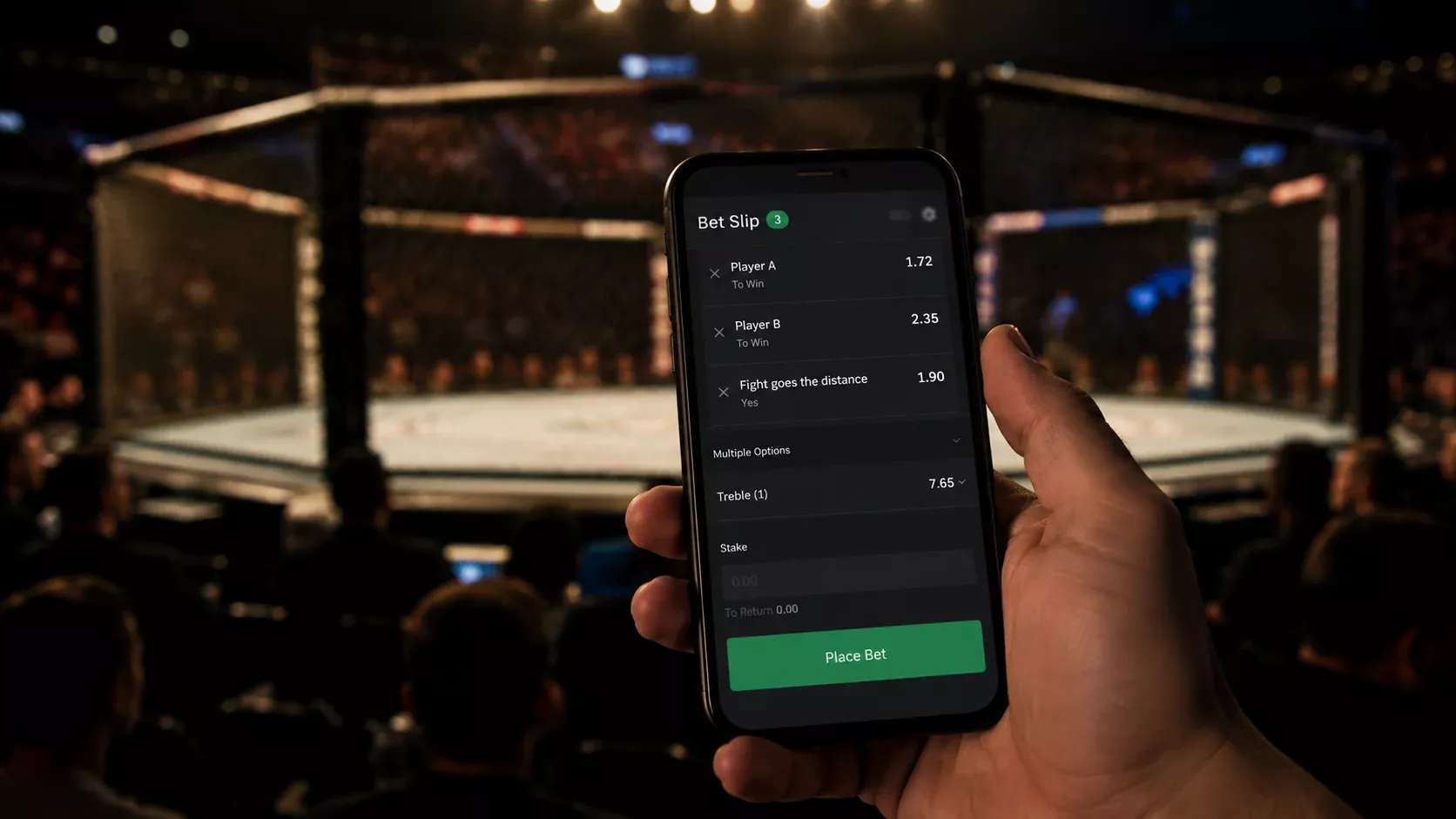
MMA betting in the UK is a licensed retail product, not a back-alley hustle. Every operator taking your money holds a UK Gambling Commission licence, your odds appear in decimal format by default, and since February 2025, a financial risk assessment kicks in automatically when your net spending crosses a defined threshold. That regulatory scaffolding is there whether you notice it or not — and understanding it before you place your first bet puts you ahead of everyone who discovers it after.
Eight percent of UK adults participated in online sports betting in 2025. A growing slice of that cohort is finding its way to MMA markets for the first time, drawn by UFC’s visibility and its relentless event calendar. This walkthrough takes you from zero to a placed bet without skipping the parts that matter — account verification, odds mechanics, card structure, deposit methods, and what happens when things go sideways.
Account Setup and KYC
The first time I opened a UK betting account, I thought I could sign up and have money on a fight within ten minutes. It took three days. Not because the process is complicated, but because I did not have a utility bill in my name at the time, and the verification system flagged me until I provided one. Lesson learned: have your documents ready before you start.
Every UKGC-licensed operator runs a Know Your Customer check at registration. You will need to provide your full name, date of birth, address, and usually a form of photo identification — passport or driving licence. Some operators verify electronically using credit reference data, which means you might sail through in minutes. Others request a scan or photo of your ID and a proof of address document — a bank statement, council tax letter, or utility bill dated within the last three months.
Since 28 February 2025, the regulatory requirements have tightened further. Operators now trigger mandatory financial risk assessments when your net spending exceeds a lower threshold than before — currently set at more than 150 pounds in net deposits over any rolling 30-day period, down from the previous 500-pound trigger. This does not block you from betting, but it may prompt the operator to ask for additional information about your financial circumstances. If you are setting up an account specifically for MMA, be aware that this threshold applies across all sports and markets on that platform, not just UFC.
The entire KYC process exists because UK law requires operators to verify your age (18+), your identity, and your address before allowing you to deposit and wager. It is not optional for the bookmaker, and it is not something you can skip. Get it done cleanly upfront and you avoid the frustration of having a withdrawal held because your documents were not submitted during registration.
Decimal Odds Explained
If you have ever bet on horse racing or football in the UK, you probably grew up with fractional odds — 5/1, 2/1, 11/4. UFC markets on UK sites default to decimal, and that switch trips up more people than it should. The good news: decimal odds are simpler to use once you stop trying to translate them back into fractions.
A decimal price tells you exactly what you get back per pound staked, including the stake itself. Suppose the favourite is priced at 2.40 — you place one pound and receive two pounds forty back if she wins, meaning one forty in profit plus your original pound. Her opponent sits at 1.55, so one pound returns one pound fifty-five — fifty-five pence profit. To calculate profit alone, subtract 1 from the decimal price and multiply by your stake. A 10-pound bet at 3.20 returns 22 pounds profit plus your 10-pound stake, for 32 total.
The implied probability is the other side of the same coin. Divide 1 by the decimal odds and multiply by 100 to get a percentage. Odds of 2.00 imply a 50% chance. Odds of 1.50 imply about 66.7%. Odds of 4.00 imply 25%. This number is not the “true” probability of the outcome — it includes the bookmaker’s margin — but it gives you a rough sense of how likely the market thinks the result is. If your own analysis says a fighter has a 40% chance and the decimal odds imply 25%, that gap is where value lives.
Most UK operators let you switch between decimal, fractional, and American formats in your account settings. I recommend sticking with decimal for MMA. The payout calculation is cleaner, and when you start comparing prices across multiple bookmakers, decimal makes the differences easier to spot at a glance. A shift from 2.40 to 2.50 is immediately visible. The same shift in fractional — 7/5 to 3/2 — requires mental arithmetic that slows you down.
Understanding the UFC Fight Card
A UFC event is not one fight. It is twelve to fourteen fights stacked into a hierarchy that determines broadcast placement, fighter pay, and — crucially for bettors — the depth of available markets.
The structure runs in three tiers. Early prelims open the card, usually featuring newer fighters or those lower in the rankings. Prelims follow, with slightly higher-profile matchups that air on a wider broadcast platform. The main card sits on top, headlined by the main event (which runs five rounds if it is a title fight or a specially designated bout) and the co-main event. Everything else on the card runs three rounds.
Why does this matter for betting? Two reasons. First, market depth drops sharply as you move down the card. A main event title fight will offer moneyline, method of victory, exact round, props, Bet Builder, and more. An early prelim might carry only moneyline and over/under. If your betting approach relies on method or round markets, you are effectively limited to the upper half of the card. Second, the quality of public pricing information declines on undercard bouts. Fewer eyes on a fight means less money flowing through the market, which means the bookmaker’s opening line faces less correction pressure and may be less accurate — in either direction.
UFC runs events almost every weekend, alternating between “UFC Fight Night” cards and numbered pay-per-view events. Fight Nights are generally shallower cards with fewer ranked fighters, while numbered events concentrate star power. UFC Freedom 250, scheduled for June 2026 at the White House South Lawn, is expected to be the most-watched UFC event in history — and it will carry the deepest betting markets of any card this year. Understanding where a fight sits on the card tells you how much information the market has digested and how much room remains for your own edge.
Placing Your First Bet
You have an account, your documents are verified, and you understand the odds format. Time to actually place a bet. I am going to walk through the mechanics step by step, because the interface can be overwhelming the first time you see a full UFC card’s worth of markets on screen.
Start by navigating to the MMA or UFC section of the sportsbook. Most operators file it under “MMA” or “UFC” in the sports menu, not under “boxing” or “combat sports” — though a few lump them together. Once you are on the right page, you will see a list of upcoming events with the earliest card at the top. Click into the event to see the full fight card.
Pick a fight and a market. For your first bet, I would suggest the moneyline on a main card bout. Not because moneyline is the best market — we covered the hierarchy in the UFC bet types guide — but because it is the simplest contract. You are betting on who wins. That is it. Click the odds next to your chosen fighter. The selection appears in your bet slip, usually a panel on the right side of the screen or a bar at the bottom on mobile.
Enter your stake — the amount you want to wager. The bet slip will show your potential return based on the decimal odds. If you are putting five pounds on a fighter at 2.20, the slip should show a potential return of eleven pounds (five pounds stake times 2.20). Confirm the bet. Most operators show a confirmation screen before the bet is final, and some offer an “accept odds changes” toggle — if the line moves between the time you add it to your slip and the time you confirm, you can choose whether to accept the new price automatically or reject it.
After placing the bet, it sits as an open wager until the fight concludes. If your fighter wins, the payout credits to your account balance. If they lose, the stake is gone. If the fight is cancelled or declared a no contest, the bet is typically voided and your stake returned — but the specifics depend on the bookmaker’s settlement rules, which brings us to cancellations.
Deposits and Withdrawals in the UK
Getting money into and out of a UK betting account is straightforward, but the timing and fees vary enough to be worth understanding before you commit to an operator. The UK online gambling sector generated 7.8 billion pounds in gross gambling yield in the year to March 2025, and the infrastructure supporting that volume is mature — deposits are typically instant, withdrawals take a bit longer.
Deposit methods on UK-licensed sites generally include debit cards (Visa, Mastercard), PayPal, bank transfer, and e-wallets like Skrill and Neteller. Credit card deposits have been banned for UK gambling since April 2020, so do not bother trying. Debit card deposits process instantly. PayPal and e-wallet deposits are also instant in most cases. Bank transfers can take one to three business days.
Withdrawals follow the same channels but take longer. Debit card withdrawals typically process within one to five business days. PayPal and e-wallets are faster — often within 24 hours, sometimes same-day. Bank transfers sit at the slow end again. Some operators impose minimum withdrawal amounts, and a few charge fees on certain methods, so check the cashier page before you deposit. The general principle: use the same method for deposit and withdrawal to avoid delays caused by anti-money-laundering checks.
One thing that catches new bettors off guard is the verification hold on first withdrawals. Even if your KYC documents were accepted at registration, some operators run an additional check the first time you request a payout. This can add a day or two. It is a regulatory requirement, not the bookmaker being difficult. Get it out of the way early by making a small test withdrawal after your first deposit, before you have significant winnings sitting in the account.
Bankroll and Stake Sizing
This is the section that separates betting from gambling, and I mean that distinction seriously. Your bankroll is the total amount you have set aside specifically for MMA betting — money you can afford to lose in its entirety without affecting your rent, bills, or savings. Not your disposable income. Not your weekend budget. A separate, ring-fenced sum.
Once you have defined that number, divide it into units. A standard approach is to make one unit equal to 1-2% of your total bankroll. If your bankroll is 200 pounds, one unit is 2 to 4 pounds. That feels small — and it should. The point of unit sizing is to survive losing streaks without wiping out your ability to bet. MMA is volatile. A five-fight losing streak is not unusual even for sharp bettors, and if you are staking 10% of your bankroll per bet, five losses in a row cuts your bankroll in half.
For a first-timer, I would suggest starting with a fixed-unit approach: every bet is the same size, regardless of how confident you feel. Confidence is subjective and unreliable, especially when you are still learning to read fights. Once you have placed fifty to a hundred bets and tracked the results, you will have enough data to consider variable staking — bigger bets on higher-confidence spots — but that is a second-year skill, not a first-week one.
Cancellations and No Contest Rules
Fights get pulled. It happens more often than the UFC’s marketing department would like, and when it does, your bet enters a grey zone governed by the bookmaker’s settlement rules rather than any universal standard. Dana White put it bluntly after pulling a fight from UFC 324 in January 2026 over suspicious betting activity: “I’m not doing this shit again. So we pulled the fight.” That cancellation left bettors worldwide scrambling to check whether their wagers were void or still live on a replacement bout.
The general rule across UK-licensed operators is that a cancelled fight results in a voided bet and a returned stake. But “cancelled” covers a range of scenarios, and each one can be treated differently. A late withdrawal — where a fighter pulls out due to injury hours or days before the event — typically voids all bets on that fight. A same-day substitution, where a replacement fighter steps in, is trickier: some bookmakers void existing bets and reopen the market; others keep bets on the original fighter void and do not reopen at all.
No contest rulings are another case. If a fight is stopped due to an accidental headbutt, an illegal strike, or a referee error and declared a no contest before a certain point (usually the end of the second round), most operators void all bets. If the no contest occurs later, some operators settle based on the scorecards at the time of the stoppage. The inconsistency across operators is real, and it is one of the reasons holding accounts with more than one bookmaker matters — not just for price comparison, but for rule comparison.
Integrity-related cancellations are the newest category. When IC360, the UFC’s integrity monitoring partner, flags suspicious betting activity and a fight is pulled as a result, the standard operator response has been to void all bets and refund stakes. This happened with the Dulgarian fight at UFC Vegas 110 in November 2025, where Caesars and William Hill refunded all bettors after irregularities were detected.
Common Beginner Mistakes
Nine years of watching beginners enter the MMA betting space has given me a reliable list of the ways people lose money in their first few months. Not from bad luck — from avoidable errors.
Betting every fight on the card. A full UFC event has twelve to fourteen fights. You do not have an informed opinion on all of them. Nobody does. Betting on fights you have not researched is a donation to the bookmaker’s margin. Be selective. Two or three well-analysed bets per card will outperform twelve random ones over time.
Chasing losses. You lose your first bet, so you double the stake on the next one to “get even.” This is the fastest way to burn through a bankroll. Each bet should be sized independently of the result of the previous one. If your unit is three pounds, it stays three pounds whether you are up forty or down sixty.
Ignoring the weight class context. A lightweight fight and a heavyweight fight are structurally different events — different finish rates, different pacing, different injury risk. Treating them as interchangeable when building your slip leads to mismatched expectations and poorly constructed bets.
Following tipsters without understanding their reasoning. MMA Twitter is full of people posting picks. Some of them are sharp. Many of them are not. If you cannot explain why a pick is good in your own words, you should not be staking money on it. Use tipsters as a starting point for your own analysis, not as a substitute for it.
Betting on name recognition. A former champion returning from a two-year layoff is not the same fighter who held the belt. Ring rust, age, and changes in the division’s competitive landscape all matter. The line usually accounts for this, but the public often does not, which is why returning stars frequently attract disproportionate money on the moneyline despite legitimate regression concerns.
Your Next Steps After the First Bet
You have placed your first bet. The fight happened. You either won or lost, and either way, you now have the basic infrastructure in place — a verified account, a bankroll, a working understanding of decimal odds and fight card structure. The next layer is market depth: understanding method of victory, round betting, and props well enough to use them when they offer better value than a straight moneyline. That is not a first-week skill, but it is a first-month one.
Track everything from the start. Write down the date, the fight, the market, the odds, your stake, and whether you won or lost. After twenty or thirty bets, patterns emerge — and those patterns are the foundation of whatever strategy you build from here.
What identity checks do UK MMA betting sites require?
All UKGC-licensed operators require Know Your Customer verification at registration: full name, date of birth, address, and photo ID (passport or driving licence). Some verify electronically; others request document uploads. Proof of address — a recent utility bill, bank statement, or council tax letter — may also be required.
How should a new bettor react when the line shifts after a missed weight?
A missed weight changes the fight dynamics — the fighter who missed may face a percentage penalty from their purse and could be affected physically or mentally. Watch how the line moves before acting. If you had a pre-existing bet, check whether the bookmaker voids it or keeps it live under adjusted conditions.
How are decimal odds read on a UFC fight?
Decimal odds show your total return per pound staked, including the stake. Odds of 2.50 mean a one-pound bet returns two pounds fifty (one fifty profit plus your original pound). To find implied probability, divide 1 by the decimal odds and multiply by 100.
What does a no contest verdict mean for a beginner’s MMA bet?
A no contest means the fight result is wiped from the official record, usually due to an accidental foul or an overturned result. Most UK bookmakers void all bets on no contest outcomes and return stakes, though settlement rules vary by operator and by when the no contest was declared during the fight.
Written by the editors at mma Betting Websites.