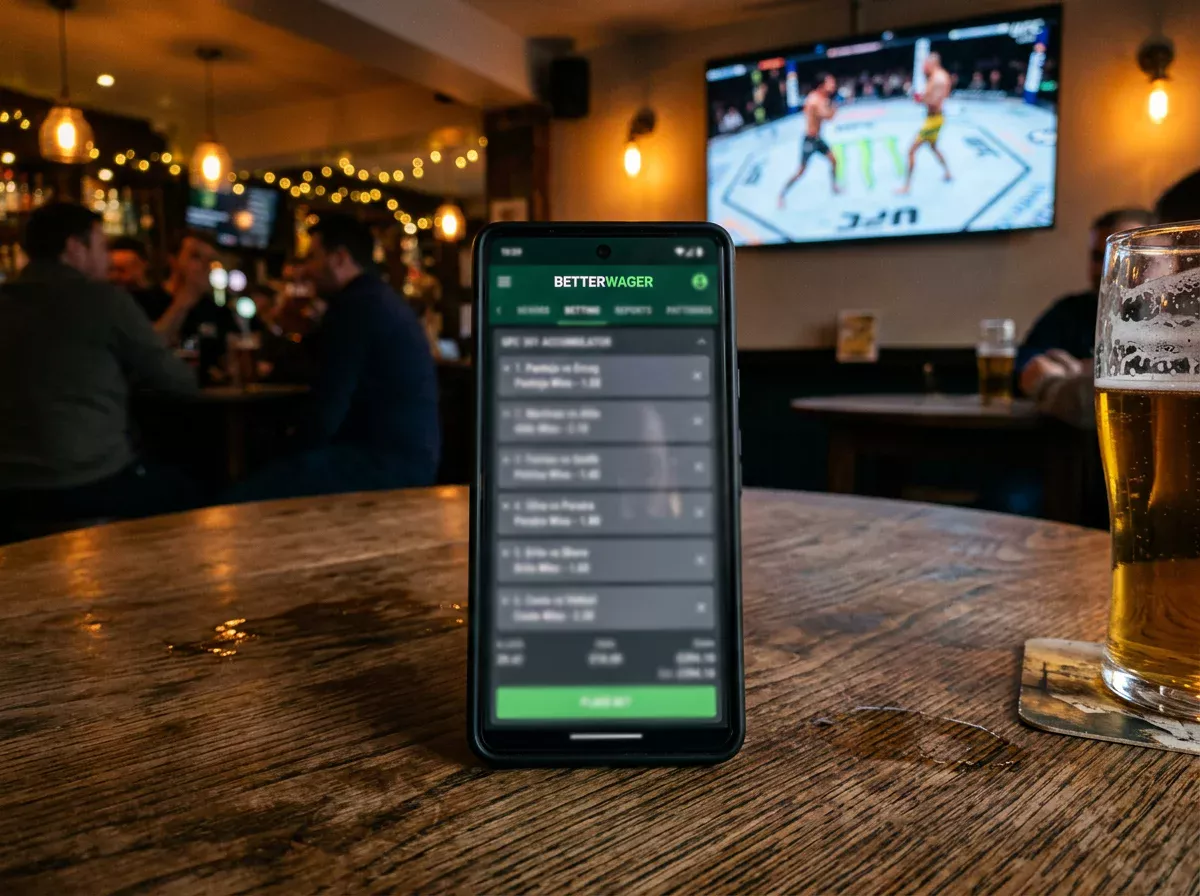
UFC Moneyline Betting: The Foundation of Every Fight Card Wager
 Available in US
Every other market on a UFC fight — method of victory, round betting, props, over/under — is derived from the moneyline. It is the anchor. When the moneyline moves, the entire pricing structure for that bout adjusts around it. Miss this, and you are building analysis on a foundation you do not understand. I have spent nine years watching how moneyline prices form and move on MMA events, and it remains the single market I check first, check last, and stake most often.
The Mechanic: One Fighter, One Price
A few years ago, a friend asked me to explain UFC betting over a pint. I told him: pick the fighter you think wins, look at the number next to their name, multiply by your stake, and that is your return. He placed his first bet that night. The moneyline is that simple on the surface — a head-to-head market where you back one fighter to win by any method in any round.
In decimal format, which most UK bettors should be using, the moneyline price includes your stake in the return. A favourite at 1.45 means a £10 bet returns £14.50 total, of which £4.50 is profit. An underdog at 3.20 means that same £10 returns £32.00, with £22.00 profit. The price tells you two things simultaneously: how much the bookmaker thinks each fighter is likely to win, and how much they will pay you for being right.
What the moneyline does not tell you is how the fight ends. A fighter wins the moneyline whether they knock their opponent out in twelve seconds or grind out a split decision over five rounds. That indifference to method is both the strength and the limitation of the market — it gives you maximum flexibility but zero granularity.
How Favourites and Underdogs Get Priced
I once watched a championship rematch open with the defending champion at 1.22 and the challenger at 4.50. By fight week, the champion had drifted to 1.35 and the challenger shortened to 3.10. Nothing had changed publicly — no injury reports, no weigh-in drama. What happened was sharp money — professional bettors with an informational edge — moving into the challenger’s side early in the week, forcing the bookmaker to adjust.
The opening price reflects the bookmaker’s initial assessment based on historical data, current form, and the matchup profile. As money flows in from bettors, the price adjusts to balance the book’s liability. In MMA, this process is more volatile than in major team sports because the betting volume is lower. A single large wager on a UFC prelim can move the line by 0.10 or more in decimal terms, whereas the same bet size on a Premier League match would barely register.
This volatility is both a risk and an opportunity. It means prices are less efficient, which creates more value for sharp bettors who move early. It also means prices can overshoot, creating temporary value on the other side. Learning to distinguish between a genuine information-driven move and a noise-driven fluctuation is a skill that takes years to develop, and the moneyline is where that skill matters most.
What the Margin Costs You
The UK sports betting market generates approximately £2.48 billion in annual gross gaming yield, and a slice of that comes from the margin built into every moneyline price. In a perfectly fair market, the implied probabilities of both fighters would sum to 100%. In practice, they sum to 104-108% on a typical UFC moneyline, with the excess representing the bookmaker’s overround.
On a fight priced at 1.60 vs 2.50, the implied probabilities are 62.5% and 40.0%, totalling 102.5%. The 2.5% overround is the cost of placing the bet. It is not unreasonable — it is lower than most prop or round-betting margins — but it compounds over hundreds of bets. Over a year of regular UFC wagering, that 2-5% margin eats into your returns relentlessly unless your strike rate exceeds the breakeven threshold.
What I track obsessively is the variation in margin across operators on the same fight. A moneyline priced at 1.62 on one site and 1.55 on another represents a 4.5% difference in your return on a winning bet. Across a full season of UFC events, that gap adds up to real money, which is why I always check the full range of available markets before staking.
Draws and No Contests
Draws in the UFC are rare — a handful per year across hundreds of bouts — but they create settlement chaos for moneyline bettors. Most UK bookmakers void moneyline bets on a draw, returning your stake. A few settle draws as a loss for both sides of the moneyline, which is a punitive interpretation that you need to check in the operator’s terms before you place.
No contests add another layer. A fight ruled a no contest — typically due to an accidental foul that prevents the bout from continuing — voids all fight-outcome markets at most UK operators. The key word is “most.” I have encountered operators who settle no contests differently depending on when the stoppage occurs: before the end of a specified round versus after. Read the settlement rules. It takes two minutes and can save you a frustrating dispute with customer support.
Moneyline vs Method: When Simple Beats Specific
UFC gross gaming revenue has grown at a compound annual rate above 18% over five years, and part of that growth has come from expanding the menu of markets beyond the moneyline. Method of victory, round betting, Bet Builder — these all offer higher potential payouts. But higher payout means higher variance and higher margin, and for the majority of bettors the moneyline remains the most efficient market on the card.
My personal split is roughly 70% moneyline, 20% method or over/under, and 10% props or specials. The moneyline gets the bulk of my bankroll because it carries the lowest margin, the most liquidity, and the clearest analytical framework: do I think this fighter wins? If yes, what price makes the bet worth taking? That directness strips away the noise that props and round markets introduce, and it keeps my decision-making clean on nights when the card is long and the temptation to overtrade is real.
The moneyline will never deliver a 15/1 payout on a single fight. It will deliver steady, compounding returns if your fighter analysis is good and your staking is disciplined. In a sport where a single punch can rearrange expectations, that steadiness has real value.
How are moneyline payouts calculated on UFC decimal odds?
Multiply your stake by the decimal odds to get your total return, including the original stake. A £20 bet at decimal odds of 2.10 returns £42.00 total: £20.00 original stake plus £22.00 profit. The decimal price already includes the stake, so no additional calculation is needed.
What happens to my UFC moneyline bet on a draw?
Most UK bookmakers void moneyline bets on a draw and return the stake. A small number settle draws as a loss on both sides of the moneyline. Check your operator’s specific settlement rules under their MMA or combat sports terms before placing, because the treatment of draws varies between platforms.
Created by the ”mma Betting Websites” editorial team.